Dogs Life: Belgian Malinois — A Purpose-Bred Life in Its Prime
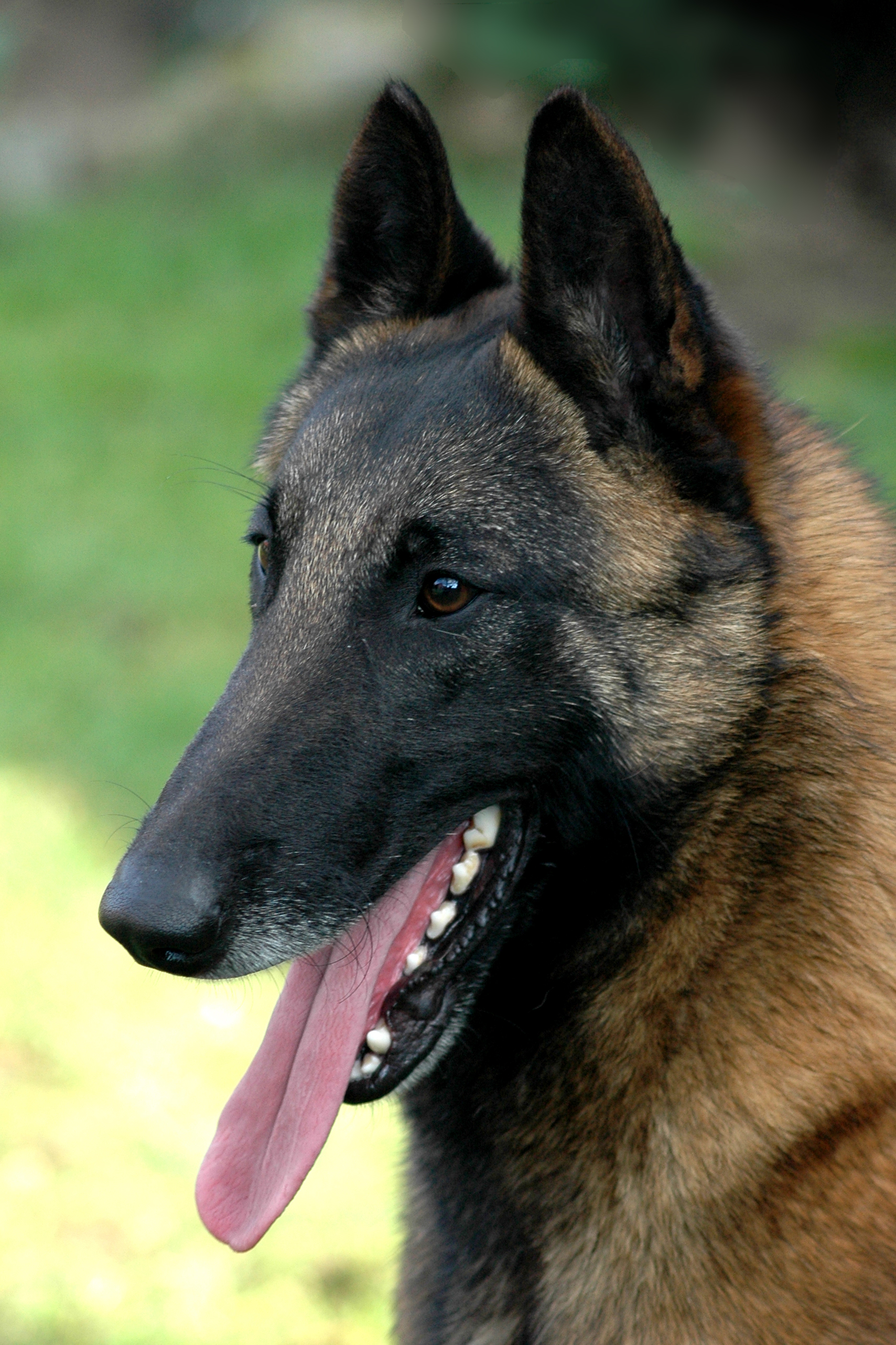
Modern breed photograph; not the historical narrator. Photo credits and licenses appear below.
The Belgian Malinois began as a versatile Belgian farm and herding dog, not as a specialist military dog. Farmers valued dogs that could manage livestock, watch the property, help pull carts, and work closely with people. Its name connects it to Malines, the French name for Mechelen, in Belgium. [1]
About this story: The dog below is fictional. His life begins on an imagined small farm near Mechelen in the 1890s and reaches old age in the early twentieth century. The historical framework comes from registry and breed-club accounts; the sensations, lessons, family, and individual events are reconstruction. “In its prime” means this dog's useful working years—not a claim that historians have identified one golden age of the breed. All photographs show modern dogs, not this farm or this animal.
Puppyhood: the world beneath the table
My first country was the space beside my mother.
There was her warmth, the pushing of the other puppies, and the dry scratch of bedding beneath us. Beyond that small country came sounds: a wooden door, a bucket touching stone, footsteps that made my mother lift her head before I knew why.
When I could follow her into the yard, everything moved too quickly. A bird crossed the ground and my feet went after it. A sheep turned its head and I stopped so suddenly that my hindquarters caught up with my shoulders. I was all beginnings: ears, feet, attention.
Our farmer did not need a dog to admire from a distance. His animals occupied small pieces of ground, and there was always something else that needed his hands. He needed a dog who would notice what was happening without making more work of it.
At first, I mostly made more work.
I carried a scrap of wood into the doorway. I followed a moving skirt. I discovered that the sound of my name meant turning away from something wonderful to look at a person who might have something better. The world did not become less interesting. The person became more important.
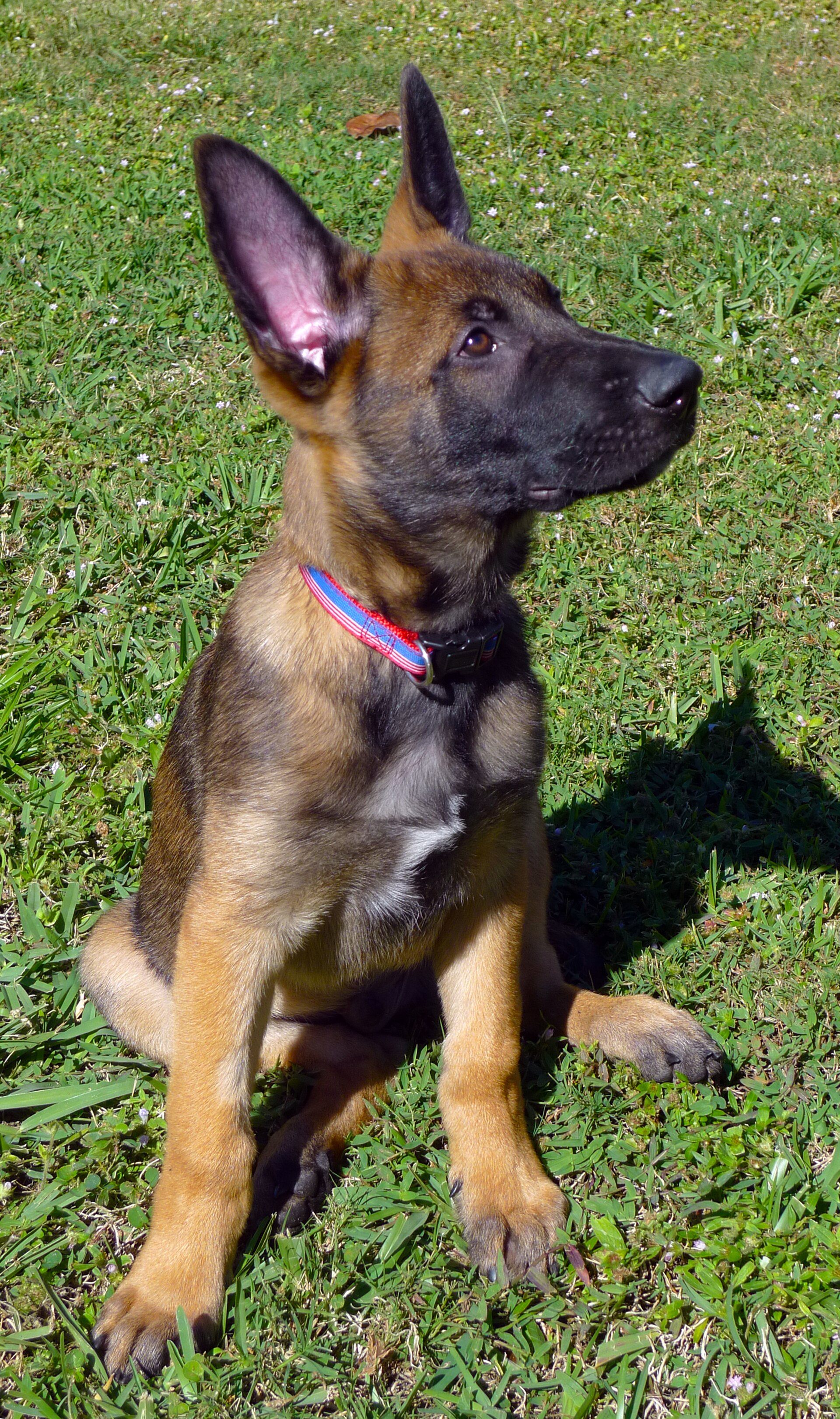
Modern puppy photograph by Don Ramey Logan; an illustration of puppyhood, not evidence of nineteenth-century rearing methods.
My education: movement was not the same as work
The first time I hurried at the sheep, they scattered. Their motion excited me; the farmer's interruption frustrated me. I had found a game. He had found a problem.
My lessons began again, at a distance where I could look without charging. I learned to return when called, to pause, and to wait while the farmer moved. Only later did I spend longer beside the animals. There was no useful work in frightening everything before we had begun.
Gradually I discovered the effect of my own body. Coming too close changed a quiet animal into a moving one. Moving farther out could leave it room to turn. Standing in the wrong place blocked the very opening the farmer wanted it to use.
One morning, a sheep drifted toward the wrong edge of our grazing ground. I went around instead of straight at it. The farmer stayed where he was. The sheep turned back toward the others. Nothing spectacular happened.
That was the lesson.
I had saved him a walk, not won a fight. Later I would save him another, and another. The small successes were the work: animals gathered without a chase, a passage kept clear, a wandering member brought back before the whole group followed.
Historical boundary: Farm herding is documented, but this lesson sequence is imagined. It is not a recovered training manual or an instruction to introduce an inexperienced dog to livestock. The AKC history describes small Belgian farms and several kinds of livestock; it does not establish one universal Malinois herding method. [1]
The body that could keep coming back
As I grew, the clumsy feet began to belong to me. I could turn, recover, and set off again. My short coat carried the weather close to my skin, and after a wet morning I welcomed the dry place waiting indoors.
I noticed the flock lifting its heads. I heard footsteps before the person came into view. I knew familiar paths through their smells, but knowing the farm was not enough. I had to notice the farmer too.
He did not always need my fastest answer. Sometimes he needed me to remain still while a gate opened. Sometimes the useful thing was to leave an animal alone.
I could have spent my energy badly. My body made movement possible; our shared practice made it useful.
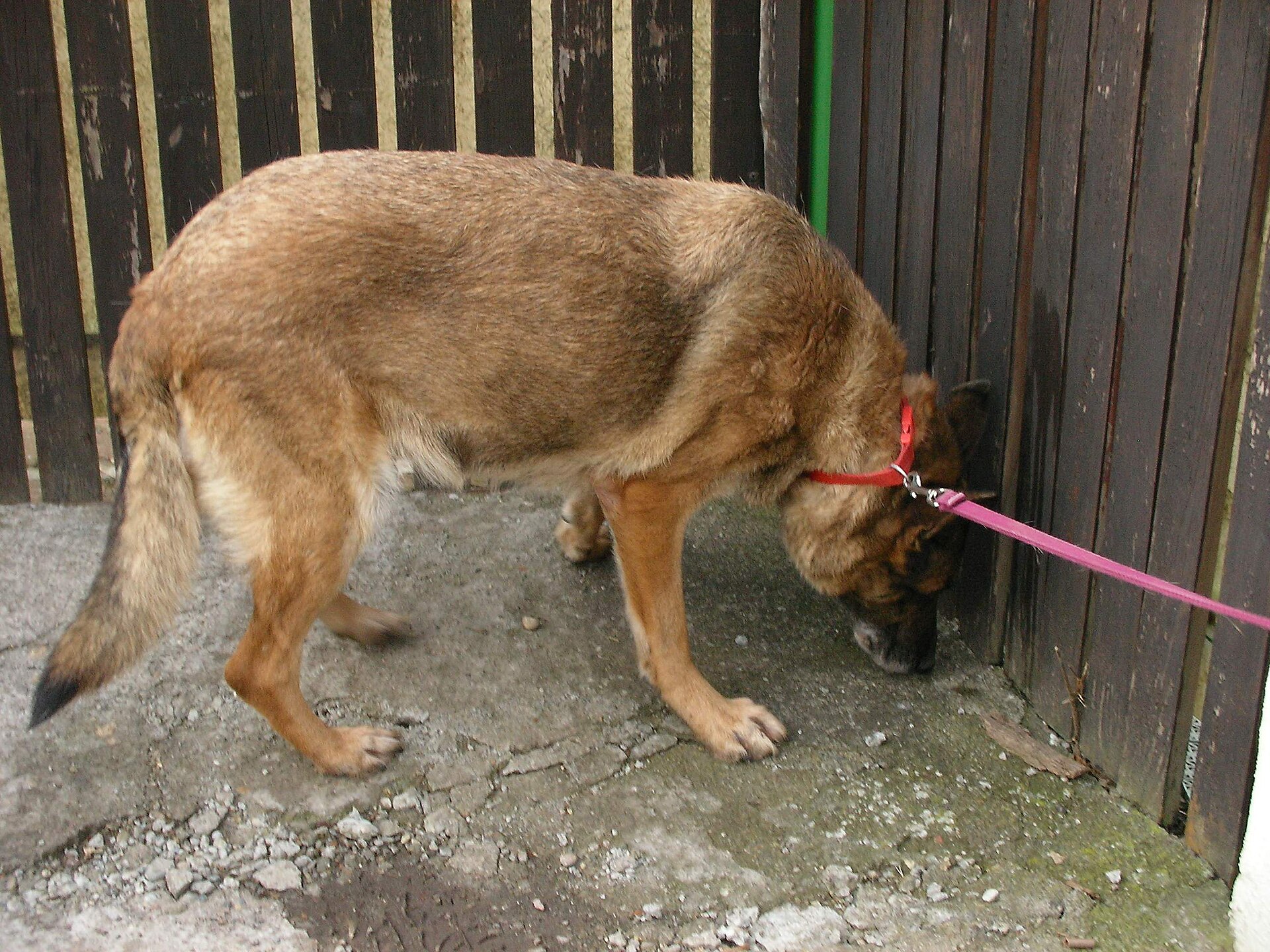
Modern photograph illustrating close investigation of the surroundings; not a demonstration of historic farm work.
What selection explains: Belgian farmers developed the Malinois from local shepherd dogs. The breed-club history describes a medium-sized, square dog and distinguishes the short-haired fawn Malinois from the other Belgian shepherd varieties. The AKC account emphasizes working ability, trainability, stamina, and attachment to people. [1][2] Those traits help explain a useful farm partner. The narration's particular sensations are imagined, and a dark mask or fawn coat should not be mistaken for proof of superior working ability.
A gate to watch, a cart to help move
The farm did not become quiet when the sheep were settled.
A person approaching along the lane could lift me from my resting place. I barked, the farmer looked up, and I waited for the next part. A familiar visitor was not a sheep to move or a danger to chase. Learning the difference mattered.
My worth at the gate was often that someone inside knew a person had arrived. There was no need for a grand struggle. A warning that brought the farmer to the doorway had already done something useful.
When I was grown, there was another lesson: the cart. The harness felt strange at first. The wheels answered my steps with a noise behind me. I learned to move steadily beside the farmer rather than dart toward every interesting thing along the way.
On those journeys, he walked with me. We stopped together. When the cart was put away, the harness came off and I returned to the ordinary freedoms of the yard.
This work was unlike gathering sheep. No animal turned because of where I stood. The cart followed because I moved it. Yet the important part was familiar: begin together, keep listening, finish together.
Historical boundary: Cart pulling and guarding are explicitly included in the AKC's account of the Malinois on Belgian farms. [1] This individual dog's harness lessons and journeys are invented; no particular load, equipment design, or frequency is documented here. Historical use is not a recommendation to put a modern dog in a cart harness without veterinary and qualified practical guidance.
My prime: the farmer could finish his own work
There came a time when our mornings needed fewer corrections.
I knew the route, but I still watched him. He knew that I was watching. While he dealt with a gate, I stayed where the animals needed me. When one hesitated, I did not turn a delay into a chase. When the work was over, I followed him back.
The farm had not grown larger. I had become more useful inside it.
A person who must leave a task to retrieve an animal loses more than the distance walked. He puts something down, goes after it, returns, and begins again. I could take away some of those interruptions. I could bring his attention to a visitor. On another day, I could help move the cart.
I did not replace his judgment. He chose where the animals went and when we stopped. What I gave him was another body in the right place, and another pair of eyes that cared about the same small world.
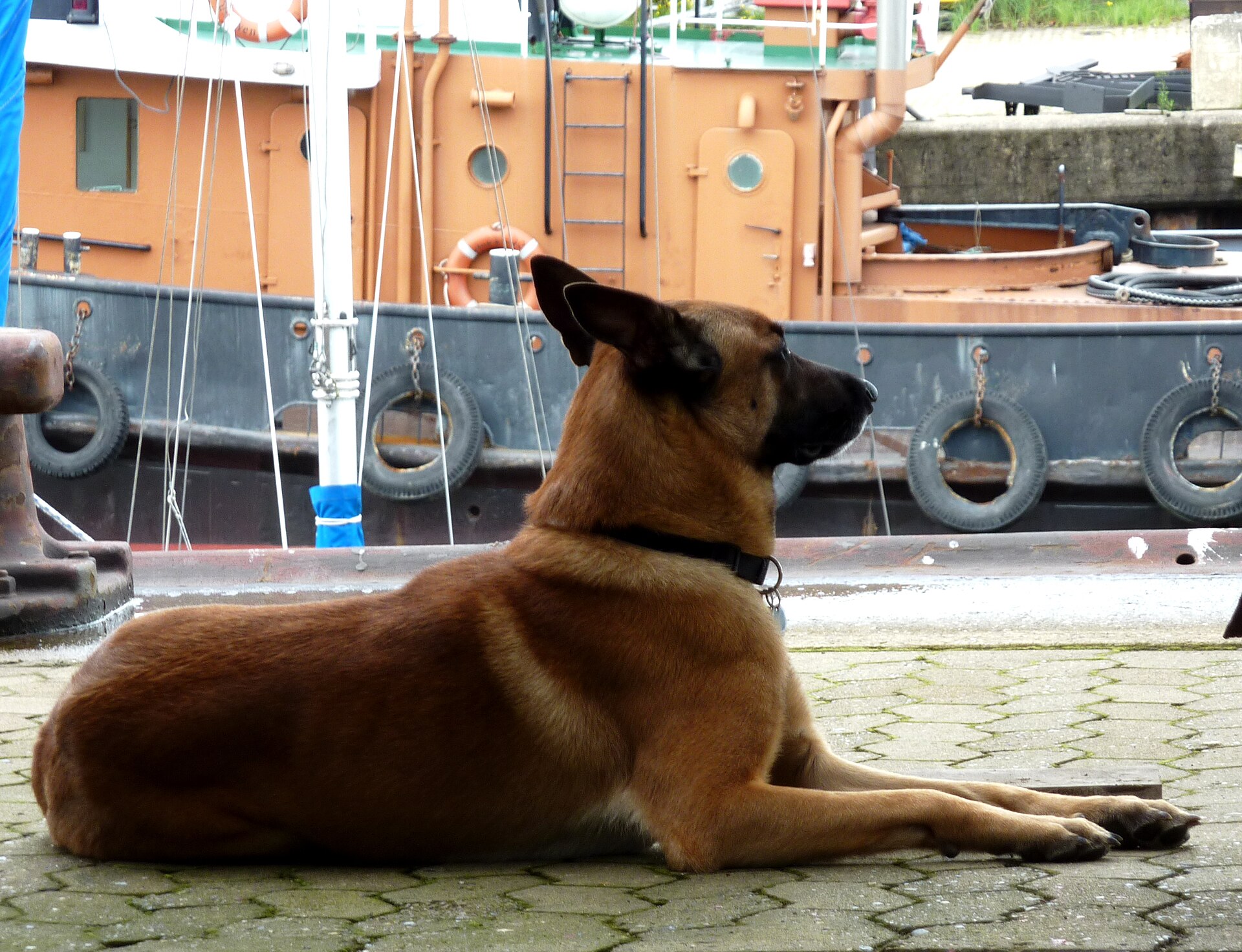
Modern adult breed illustration. The harbor setting is not the story's Belgian farm.
My happiest moments were not all in motion. At the end of a day, the farmer might sit down and let his hand rest against my neck. I could hear the house around us. If he stood, I opened my eyes.
There was still somewhere he might need to go.
When the young dog took the longer way
Age arrived in small changes before it became a different life.
I rose more carefully. After a long morning, I chose my resting place sooner. A younger dog began accompanying us, full of the urgency I remembered without wanting to share it.
The farmer took that dog on the longer outings. The cart stopped being mine. I still went into the yard, still watched the doorway, still turned my head when the familiar steps began.
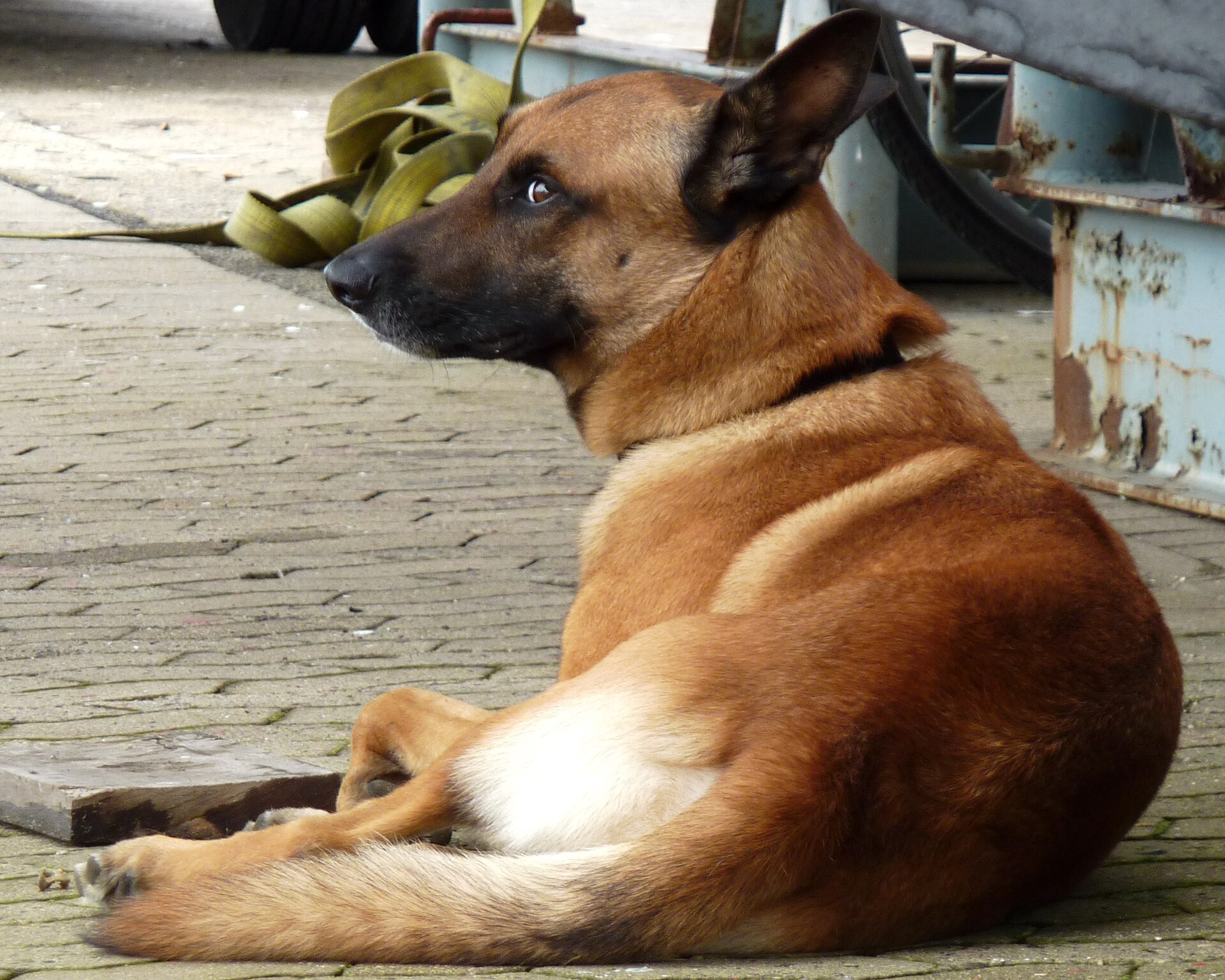
Modern resting adult, not a verified senior dog. This photograph illustrates rest, not an age diagnosis.
At first I stood whenever they left. Later I watched them go and settled again. When they returned, the young dog carried the outside world into the house in its coat and feet. I smelled where they had been.
The farmer's hand found me as it always had. My days no longer needed a journey to have a shape.
In my last winter, the world grew smaller: a dry bed, the doorway, the voice that had once called me away from every exciting thing. I slept more than I watched. On my final evening, I lay near the family and rested my head against a familiar hand. There was nothing left to gather.
What remained after the work
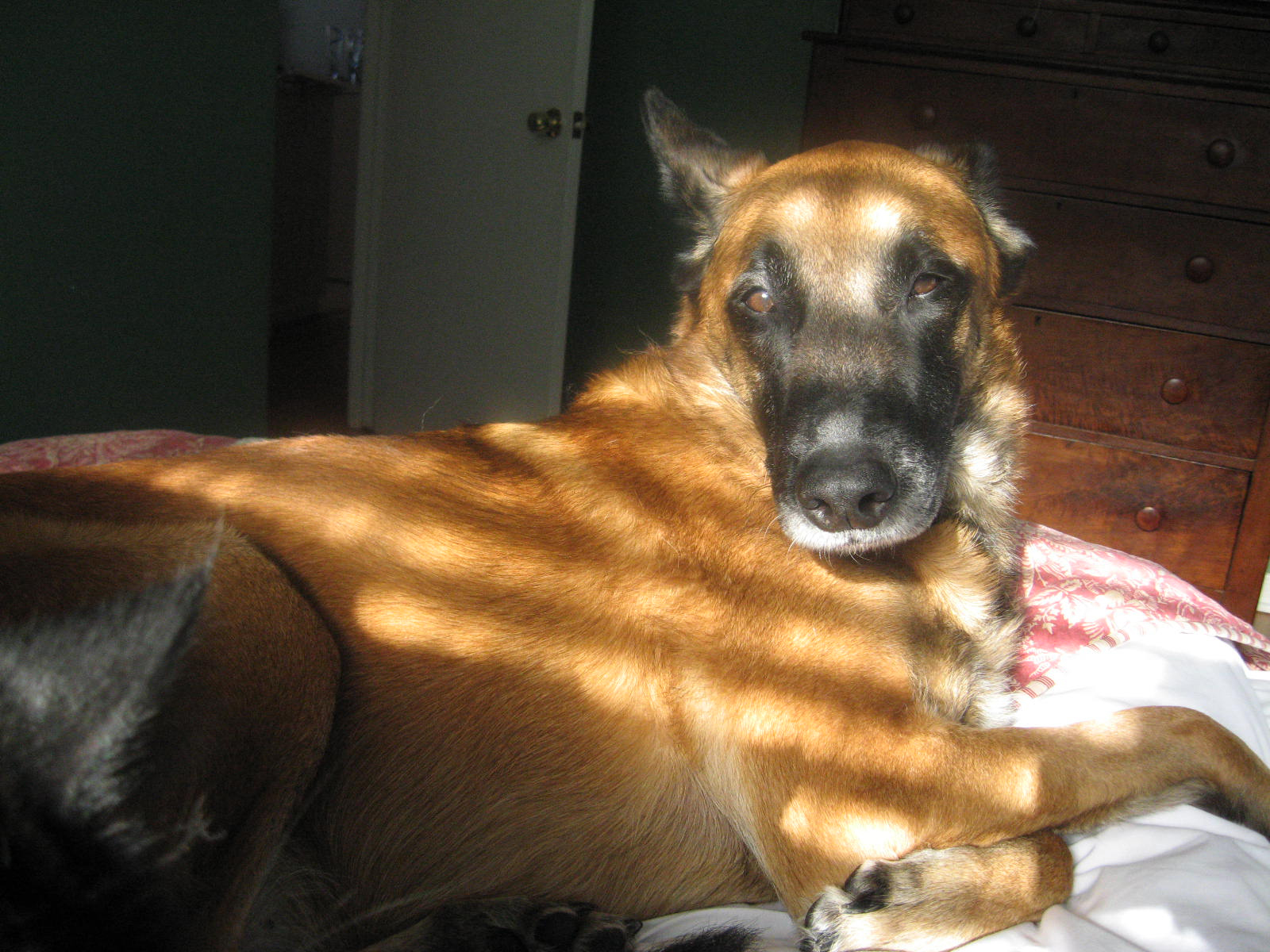
Modern domestic photograph illustrating companionship; not a picture of the fictional narrator's retirement.
The story ends with an imagined quiet death, not a documented historical event. Its legacy is the ordinary value of a working partnership: livestock managed, tasks shared, arrivals noticed, and a household accompanied across years.
The American Belgian Malinois Club dates the first Belgian Shepherd standard to 1892. [2] That places this imagined puppyhood during formal breed development, not in an era when the modern breed's identity had been fixed for centuries. The Malinois was one of four Belgian shepherd varieties distinguished by coat. Later police, military, sport, and other working roles are part of its history, but they should not erase the farm dog underneath. [1][2]
For the wider context, read why dogs were bred for jobs, not aesthetics.
There is also a modern caution. A history of close, demanding work does not make the Malinois an easy fit for an ordinary low-structure household. The AKC account stresses experienced ownership and an understanding of the breed's intensity. [1] Admiring a working life is not the same as being equipped to provide one.
FAQ
What were Belgian Malinois originally bred for?
They developed from local Belgian shepherd dogs as herding and versatile farm dogs. The AKC's historical account includes managing livestock, guarding farms, and pulling carts before discussing later service roles. [1]
Where does the name Malinois come from?
It comes from Malines, the French name for Mechelen in Belgium. The short-haired fawn Belgian shepherd variety was developed in that region. [1][2]
Is this the true story of a particular Belgian Malinois?
No. It is a fictional first-person life built around documented breed history. The dog, farm, family, training episodes, retirement, and death are invented. The photographs show modern dogs and do not document the narrative.
Did every Belgian Malinois herd, guard, and pull a cart?
The sources describe these as farm roles, not a checklist fulfilled by every individual. This composite story gives one imagined dog several documented kinds of work without claiming that every farm used its dogs identically.
Sources and method
Historical claims were checked against these sources on October 29, 2026:
- American Kennel Club: Belgian Malinois History — farm origins, Mechelen/Malines, livestock work, guarding, cart pulling, working traits, and modern ownership context. This is a retrospective breed-history article, not a nineteenth-century farm diary.
- American Belgian Malinois Club: History — Belgian shepherd varieties, regional naming, early physical description, and the 1892 standard.
These sources establish the framework, not the biography. No archival record of this dog exists. The story does not claim veterinary review, trainer credentials, breeder expertise, or hands-on historical verification. Details of sensory experience and household life are literary reconstruction. Retirement here is a humane fictional choice, not evidence that all historical working dogs received such care.
Photograph credits
- Belgian Malinois 01.jpg — D. Williams; CC BY 2.0. No edits by Dogthread; Wikimedia rendition used.
- Belgian Malinois at 10 weeks photo Don Ramey Logan.jpg — Don Ramey Logan; CC BY 4.0. No edits by Dogthread; Wikimedia rendition used.
- Belgian shepherd malinois femelle (1).jpg — Gzen92; CC BY-SA 4.0. No edits by Dogthread; Wikimedia rendition used.
- Malinois, Belgian Shepherd.jpg — Oxfordian Kissuth; CC BY-SA 3.0. No edits by Dogthread; Wikimedia rendition used.
- Malinois, Belgian Shepherd 02.jpg — Oxfordian Kissuth; CC BY-SA 3.0. No edits by Dogthread; Wikimedia rendition used.
- BelgianShepherdMalinois.jpg — martine_michelle; CC BY 2.0. No edits by Dogthread; Wikimedia rendition used.