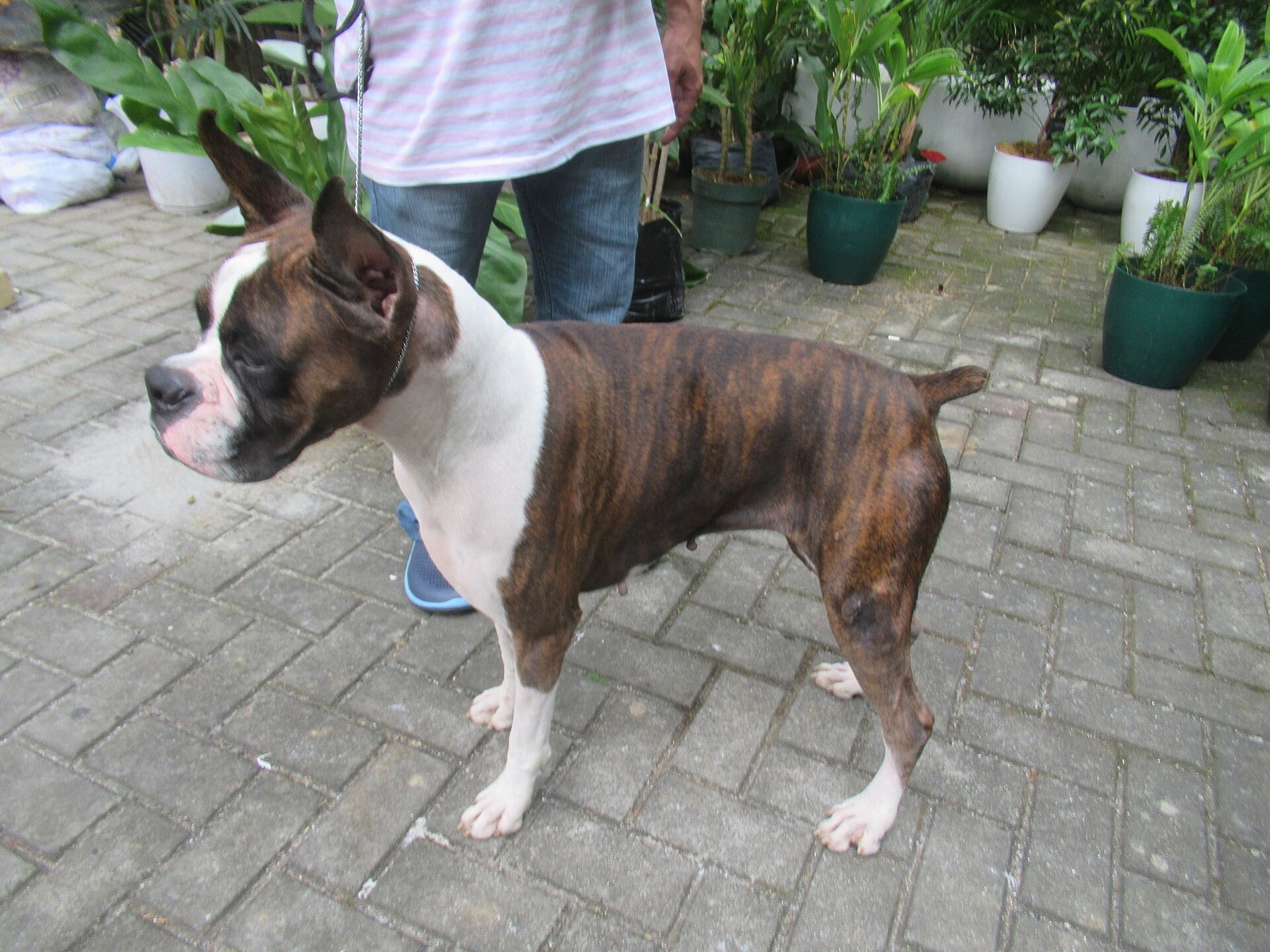
French Bulldog Heat Safety: What Owners Need to Know
French Bulldogs need extra heat caution because their short, flat faces make cooling harder. A Frenchie who looks “just a little tired” on a hot or humid day can slide into trouble faster than many owners expect. The safest rule is simple: keep warm-weather exercise short, avoid midday heat, watch breathing closely, and treat heat stress as urgent rather than waiting to see if it passes.
This is general owner education, not veterinary diagnosis. If your French Bulldog is struggling to breathe, weak, disoriented, vomiting, collapsing, or not recovering quickly after heat exposure, contact a veterinarian or emergency clinic right away.
Why French Bulldogs overheat so easily
French Bulldogs are brachycephalic dogs, meaning they have short muzzles and compressed upper airways. Dogs rely heavily on panting to release heat. When a dog’s airway is already less efficient, panting has to work harder. That is why Frenchies can struggle in conditions that might feel merely warm to a person or manageable for a longer-nosed dog.
Humidity makes the problem worse because panting depends partly on evaporation. Excitement also matters. A Frenchie chasing a ball, greeting visitors, pulling toward another dog, or refusing to stop playing may overheat before the owner realizes the dog has crossed the line.
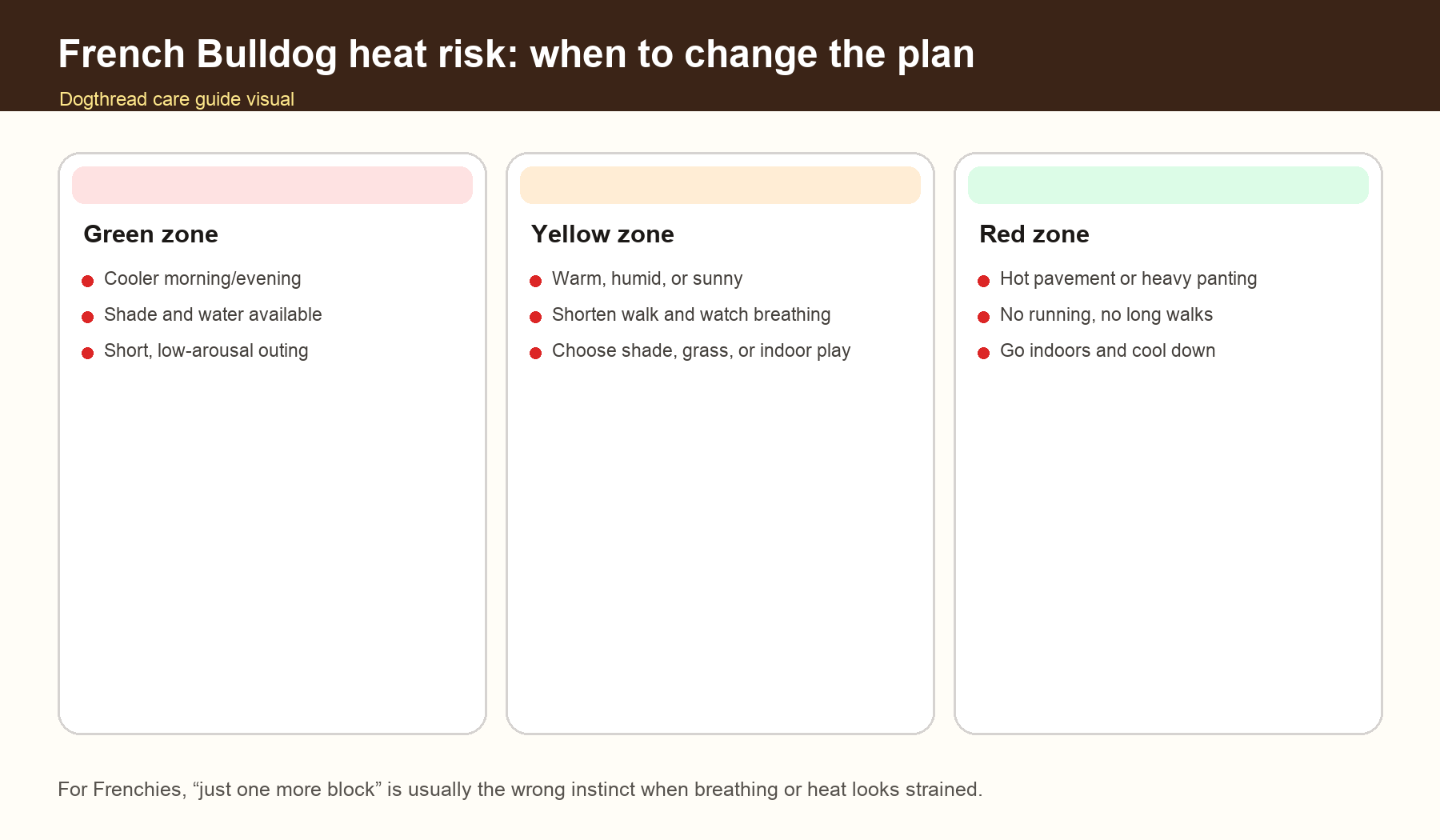
Do not use a fixed temperature number as your only guide. Air temperature, humidity, sun, pavement heat, coat color, body condition, age, fitness, breathing history, and excitement all change risk. A warm cloudy morning can still be a problem if humidity is high. A short walk can become too much if the dog is pulling, panting hard, or cannot settle.
Heat stress warning signs
The most important French Bulldog heat safety skill is noticing early changes and stopping before it becomes an emergency. Watch for heavier or louder panting than usual, slowing down, seeking shade, refusing to walk, a worried or glazed expression, drooling, restlessness, or difficulty settling after activity.
More serious signs can include weakness, stumbling, collapse, vomiting, diarrhea, abnormal gum color, sticky gums, confusion, seizures, or breathing that looks labored rather than merely fast. Those signs deserve urgent veterinary guidance.
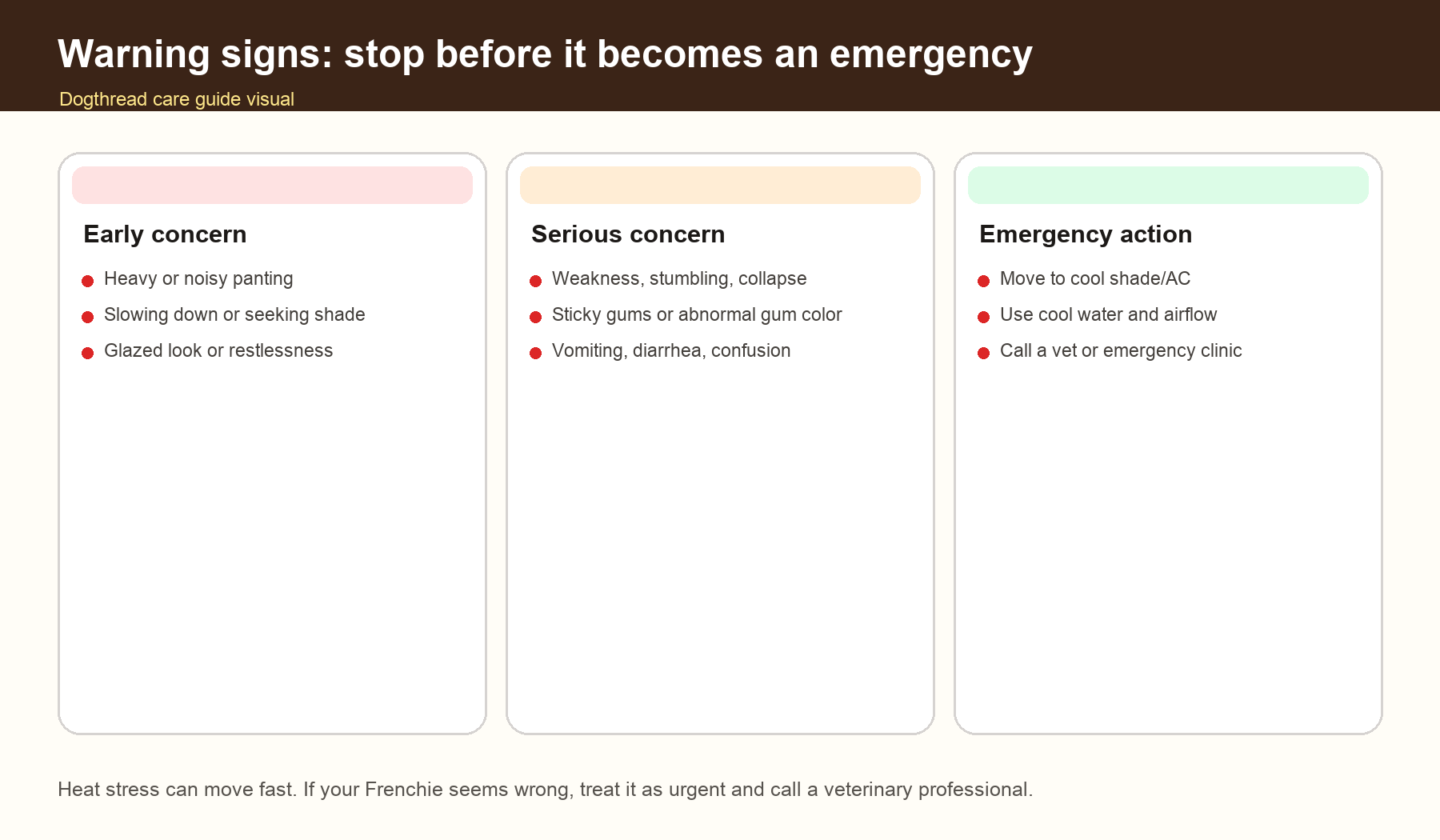
If you are debating whether your Frenchie is “probably fine,” that is usually your cue to stop the activity, get the dog cool, and reassess. Dogs do not get bonus points for finishing the walk. Neither do owners, despite what the fitness app cult would like you to believe.
Safer walks and outdoor time
For French Bulldogs, summer exercise should be boring on purpose. Use early mornings or later evenings, keep routes short, stay near home, and choose shade, grass, and slow sniffing over pavement marches. Sniff walks are not lazy. For many dogs, they are mentally satisfying without turning the body into a radiator with legs.
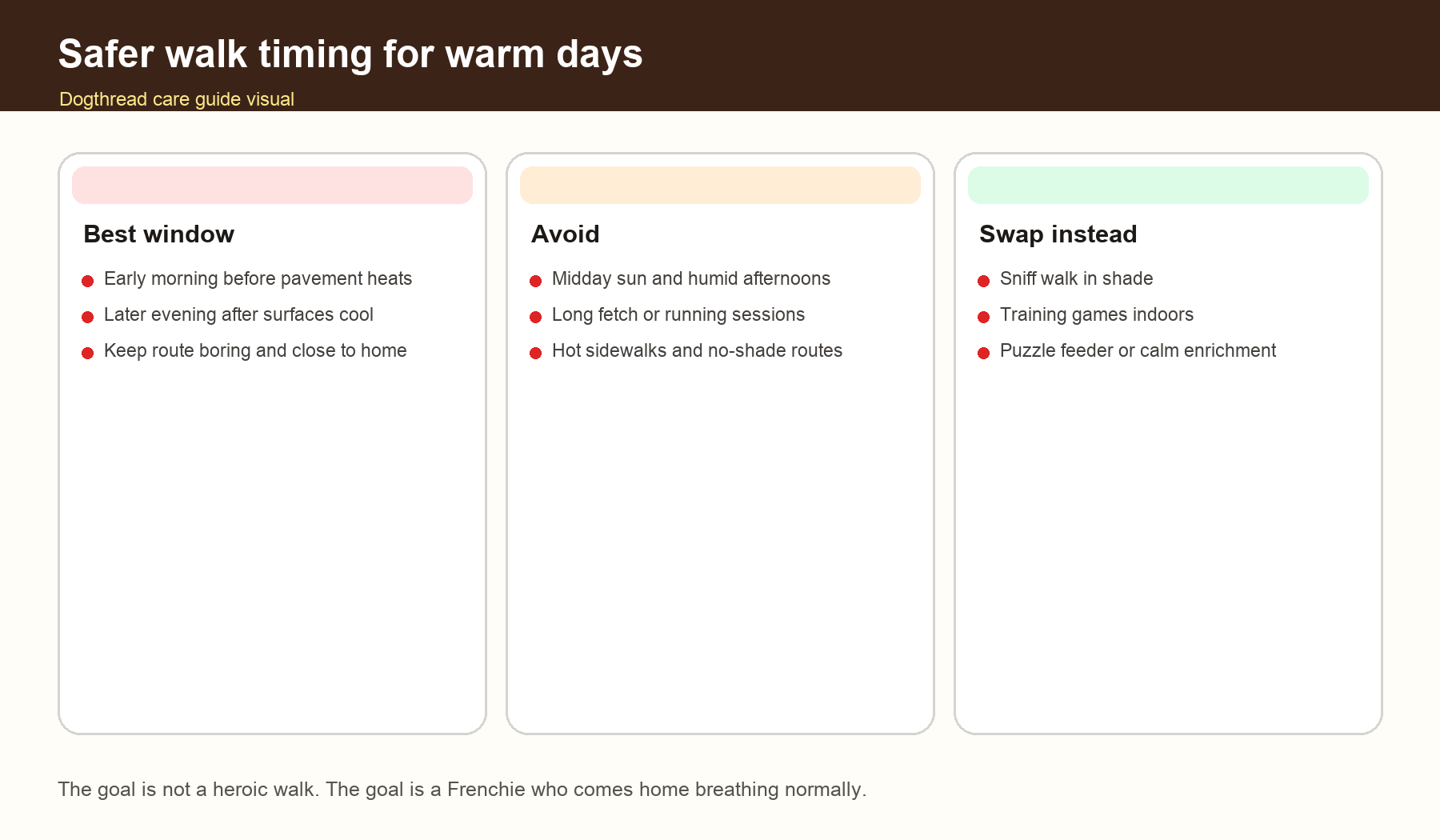
Avoid midday heat, long fetch sessions, jogging, bike running, rough play in the sun, and long leash walks where the dog has to pull or keep pace. If the pavement is too hot for your hand, it is not a good surface for paws. Even when the pavement is tolerable, reflected heat can still make low-bodied dogs warmer.
A practical rule: end the outing while your Frenchie still looks normal. Do not wait until panting becomes dramatic. Once breathing is strained, you are not training endurance; you are negotiating with biology, and biology has excellent lawyers.
Cooling, water, and car safety
Fresh water, shade, and air movement should be available any time your Frenchie is outside in warm weather. Indoors, air conditioning or fans may matter more for French Bulldogs than for hardier breeds. If your home gets hot, plan cooling before the dog is already uncomfortable.
Water play can help some dogs stay comfortable, but do not assume water equals safety. Many French Bulldogs are not strong swimmers and may need a properly fitted dog life jacket around pools, lakes, docks, or boats. Supervise closely, keep sessions short, and provide shade breaks.
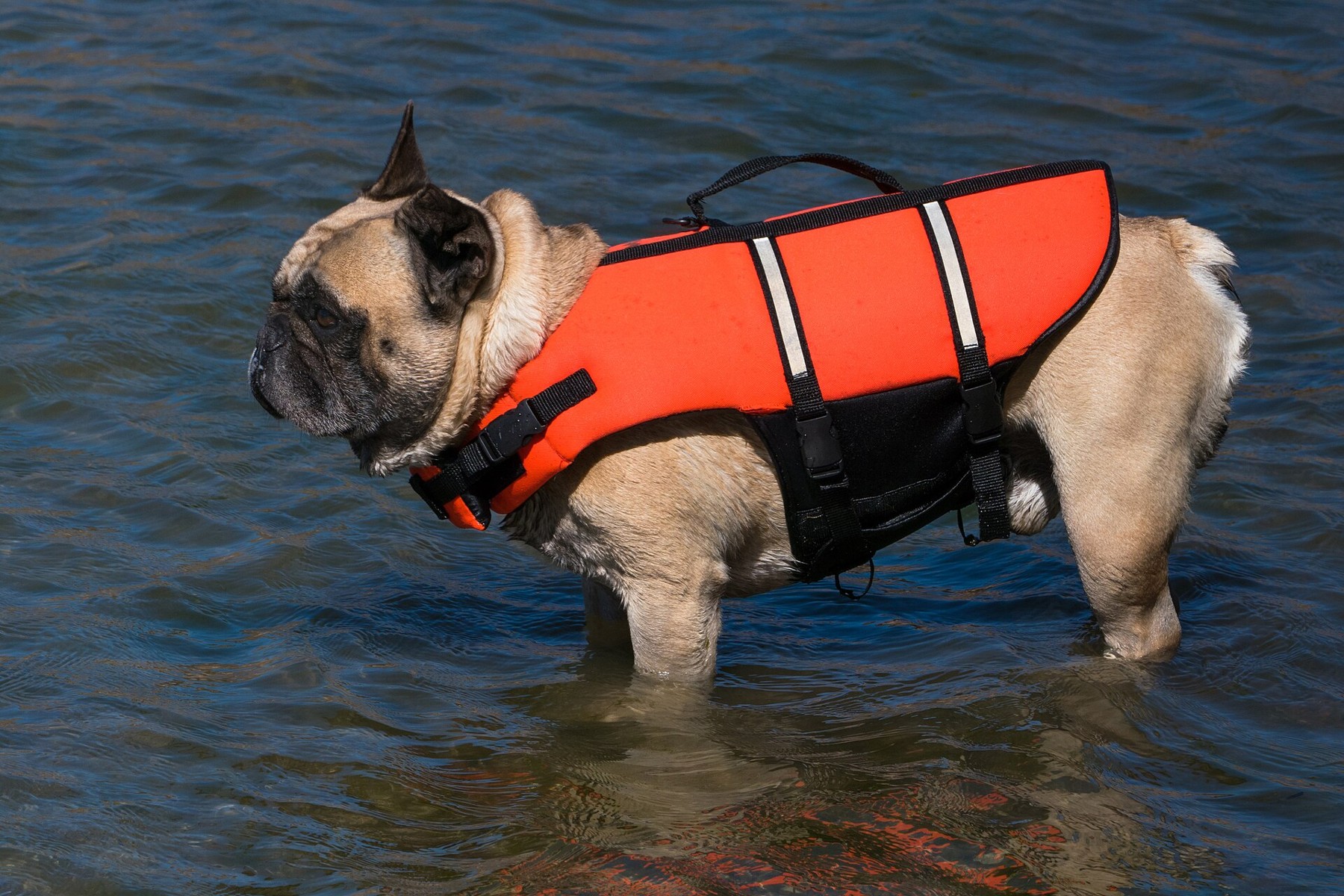
Never leave a French Bulldog in a parked car. Not for a quick errand, not with the windows cracked, not because you “will only be two minutes.” Cars can heat dangerously fast, and flat-faced dogs have less margin for error. This is one of those situations where optimism is just negligence wearing sunglasses.
Also be careful with travel crates, strollers, backpacks, and carriers. Ventilation matters. A cute enclosed setup can become a heat trap if air is not moving.
What to do if your Frenchie gets too hot
If your French Bulldog appears overheated, stop activity immediately and move to shade, air conditioning, or a cooler area. Offer small amounts of water if the dog is alert and able to drink normally. Use cool, not icy, water on the body and combine it with airflow from a fan or air conditioning when possible.
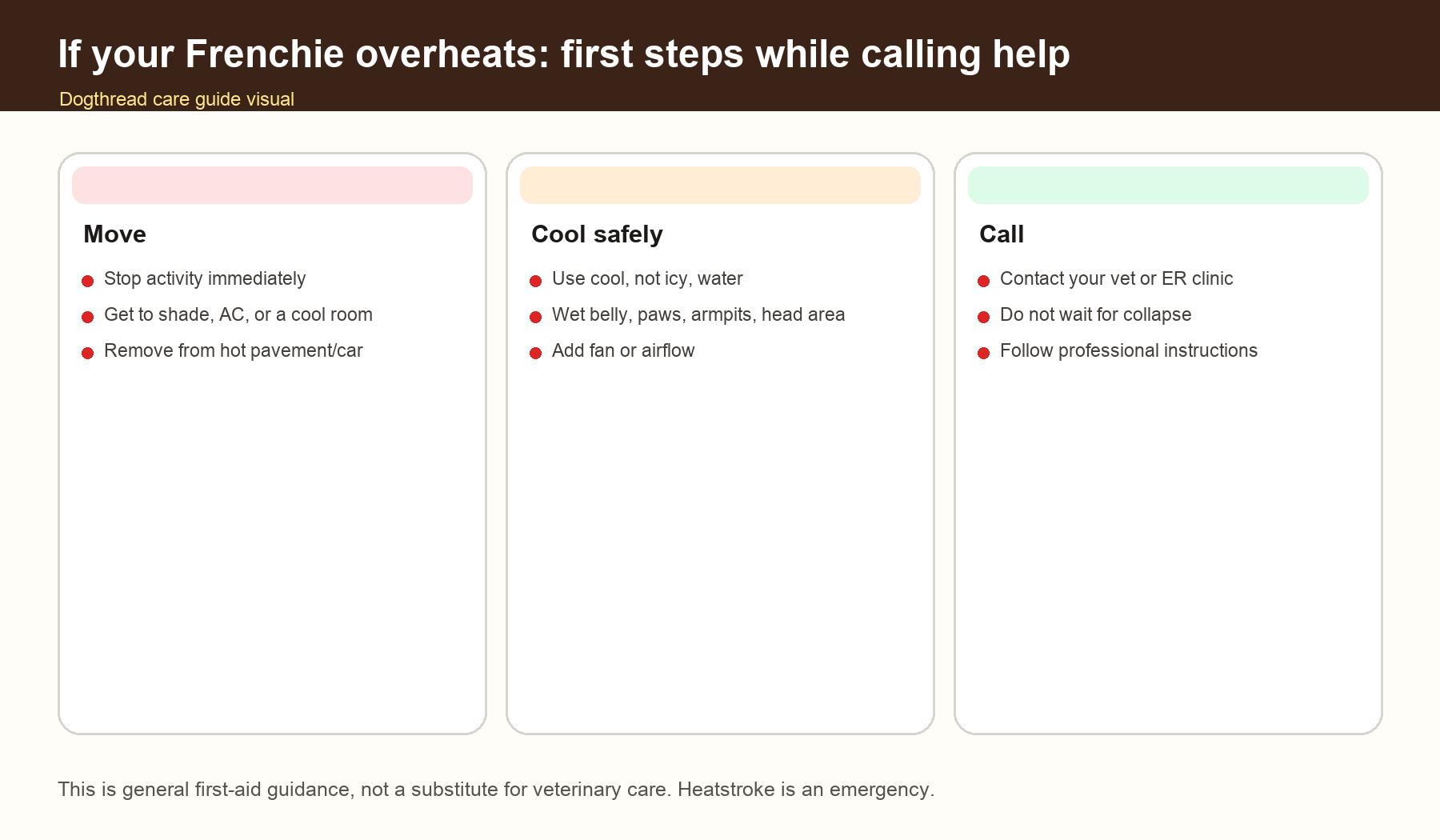
Do not use ice baths, rubbing alcohol, or extreme cooling methods unless specifically directed by a veterinarian. Overcooling can create its own risks. The safer owner move is controlled cooling plus veterinary contact.
Call your veterinarian or an emergency clinic if symptoms are serious, if breathing seems difficult, if the dog collapses or seems confused, or if the dog does not improve quickly. Heatstroke can affect organs even after the dog seems calmer, so do not treat “looks better now” as a perfect all-clear when the episode was significant.
Daily heat safety checklist
Before warm-weather outings, ask:
- Is it hot, humid, sunny, or poorly ventilated?
- Is my Frenchie already excited, tired, overweight, older, very young, or breathing noisily?
- Is the route shaded and close to home?
- Is pavement temperature safe?
- Do I have water and a way to cool down quickly?
- Can I switch to indoor enrichment instead?
For many Frenchies, the best hot-day plan is not a walk at all. Use food puzzles, gentle training, short indoor games, scent work, chewing, or calm social time. A tired owner may want the walk. The dog may need the air conditioner. Annoying, but dogs rarely read the schedule.
When to talk to your vet
Talk to your veterinarian if your French Bulldog has noisy breathing, exercise intolerance, frequent overheating, fainting, blue or pale gums, repeated gagging, trouble recovering after activity, or any history of airway surgery or breathing problems. Some Frenchies have more severe airway restriction than others, and your vet can help you understand your individual dog’s risk.
A vet can also advise on body weight, safe exercise, travel planning, surgical airway evaluation when appropriate, and what to do during local heat waves. Heat safety is not only about July afternoons. It is part of everyday French Bulldog care.
FAQ
What temperature is too hot for a French Bulldog?
There is no single safe cutoff for every French Bulldog. Heat risk depends on humidity, sun, pavement temperature, airflow, activity level, and the dog’s health. Many Frenchies need caution well before conditions feel extreme to people. When in doubt, shorten the outing or stay indoors.
Can French Bulldogs go for walks in summer?
Yes, but walks should usually be short, slow, shaded, and timed for cooler parts of the day. Avoid midday heat, hard exercise, and hot pavement. Watch breathing and stop early.
Are French Bulldogs more likely to get heatstroke?
French Bulldogs are at higher heat risk than many longer-nosed breeds because their short airways make cooling less efficient. Individual risk varies, but owners should treat heat prevention as a core care habit.
Should I shave my French Bulldog in hot weather?
Do not shave a French Bulldog as a heat-safety solution without veterinary or professional grooming guidance. Their short coat is not the main problem; airway efficiency, heat exposure, humidity, activity, shade, and cooling access matter much more.
What should I do if my Frenchie is panting hard after a walk?
Stop activity, move to a cool place, offer water if the dog can drink normally, use cool water and airflow, and monitor closely. If breathing is labored, the dog is weak, disoriented, vomiting, collapsing, or not improving quickly, contact a veterinarian or emergency clinic immediately.
Bottom line
French Bulldog heat safety is mostly prevention: shorter outings, cooler timing, shade, water, air conditioning, careful travel, and fast action when breathing or behavior changes. Frenchies are not built for heat heroics. Keep the plan conservative, stop early, and save the dramatic endurance arc for a movie dog with a much longer nose.