Loose Leash Walking: A Practical Training Guide for Everyday Walks
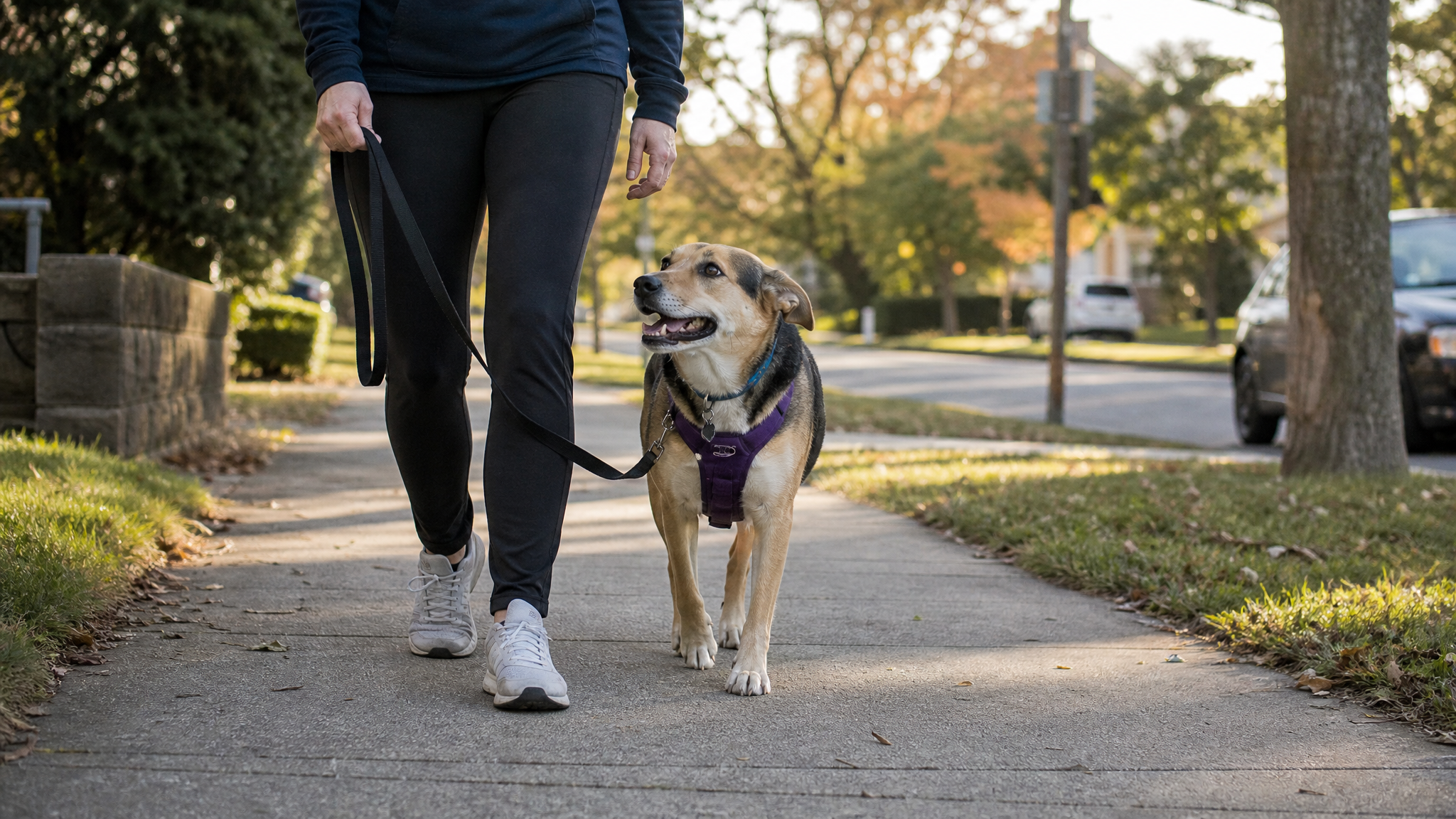
Loose leash walking means your dog can move, sniff, and enjoy the walk without dragging you down the street. It is not a military heel. It is not your dog glued to your knee for forty minutes. The goal is simpler and more useful: the leash stays soft most of the time, your dog can respond when you change pace or direction, and both of you finish the walk with your shoulders still in their original sockets.
The fastest way to improve loose leash walking is to stop treating the walk as one long test. Break it into short teachable moments: reward your dog when the leash is loose, stop or reset when the leash tightens, practice first in boring places, then slowly add real-world distractions. Most dogs pull because pulling works. It gets them to smells, people, dogs, grass, doorways, and whatever mysterious sidewalk crime scene they need to investigate immediately. Your job is to make a loose leash work better than pulling.
What loose leash walking actually means
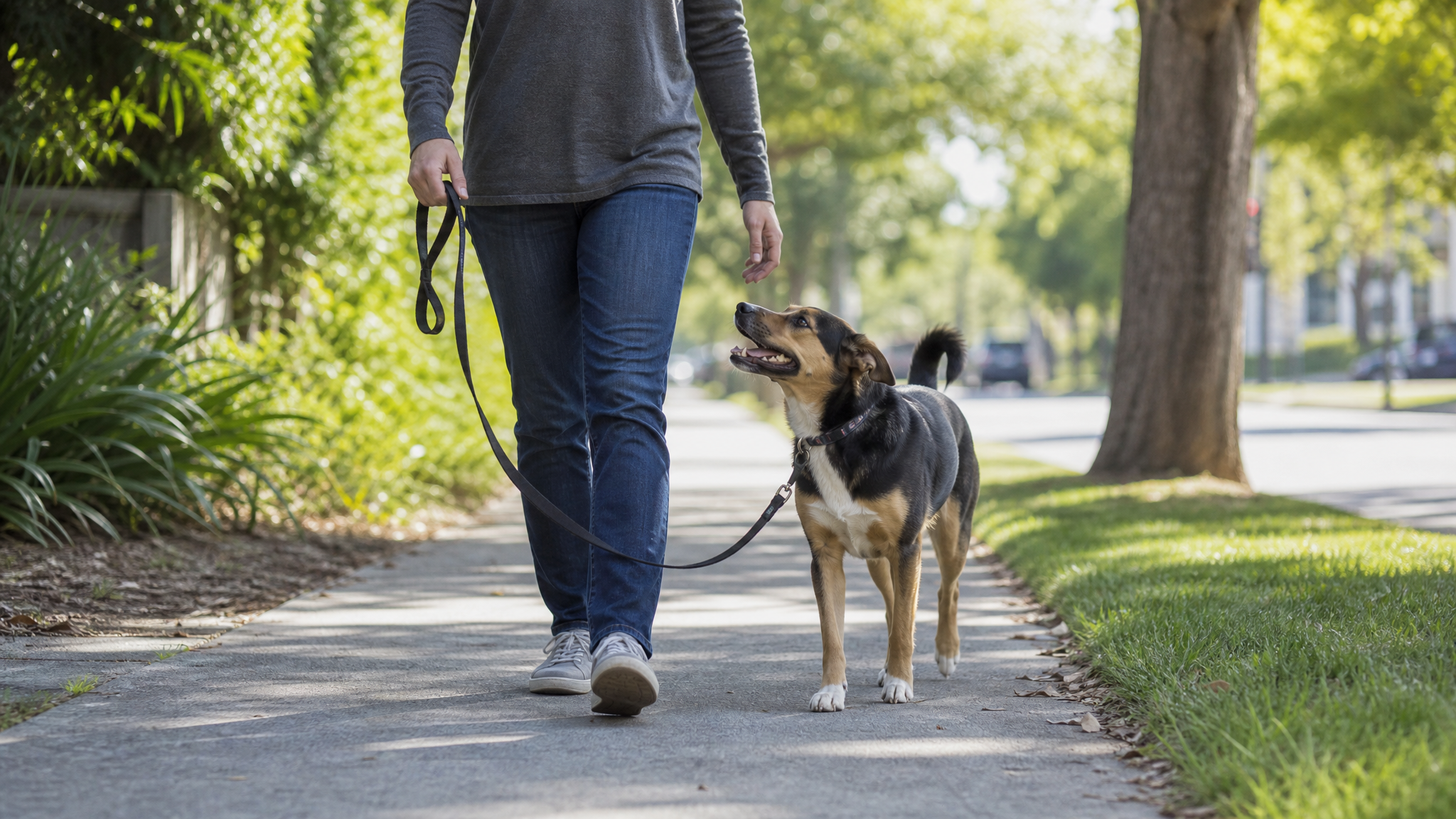
Loose leash walking means the leash has a soft curve or slack instead of steady tension. Your dog may walk beside you, slightly ahead, or slightly behind depending on the environment, but they are not leaning into the leash to move forward. They can check in with you, respond to a cue, and recover after distractions.
That distinction matters because many owners accidentally train for the wrong thing. A perfect heel is formal obedience. Loose leash walking is an everyday life skill. Most family dogs do not need to stare up at a handler for the whole walk. They need to understand that pulling does not make the walk continue faster.
A good everyday standard is this: your dog can sniff, look around, and be a dog, but if the leash gets tight, forward progress changes. The walk does not become a sled-pulling internship.
Why dogs pull on leash
Dogs pull because the world is interesting and humans are slow. That is the scientific explanation with the boring parts removed.
More specifically, pulling gets reinforced. If your dog lunges toward a smell and reaches it, pulling worked. If they drag toward another dog and get closer, pulling worked. If they charge out the front door and the walk begins, pulling worked before you even left the porch.
Pulling can also come from excess energy, frustration, fear, poor equipment fit, too much stimulation, or a history of being walked only when the dog is already excited. Some dogs pull hard because they have never been taught another way to move through the world. Others pull because the walk is the only interesting part of their day, so every scent feels like a limited-time offer.
Do not read pulling as stubbornness by default. Treat it as information: the dog wants something, the environment is too hard, or the habit has been rewarded for a long time.
Start before the walk starts
Loose leash walking begins before the leash clips on. If your dog explodes at the sight of the leash, dances through the doorway, and launches into the yard, the first block of the walk is already lost.
Practice the boring pre-walk routine. Pick up the leash, reward calm behavior, put the leash down. Clip it on, feed a treat, unclip it. Walk to the door, pause, reward four paws on the floor. Open the door only when the dog can wait for half a second of sanity. You are not trying to crush enthusiasm. You are teaching that calm behavior opens the world.
For high-energy dogs, do a minute or two of simple focus work before leaving: name response, hand target, sit, or a few treat tosses in the house. The point is not to tire the dog out. The point is to remind their brain that you exist before the sidewalk takes over.
Teach the leash rule in a boring place
Do not start loose leash training on the busiest street, at the park entrance, or beside the neighbor’s dog who has apparently been sent by management to ruin your session. Start somewhere boring: driveway, hallway, backyard, empty parking lot, quiet sidewalk, or a low-distraction path.
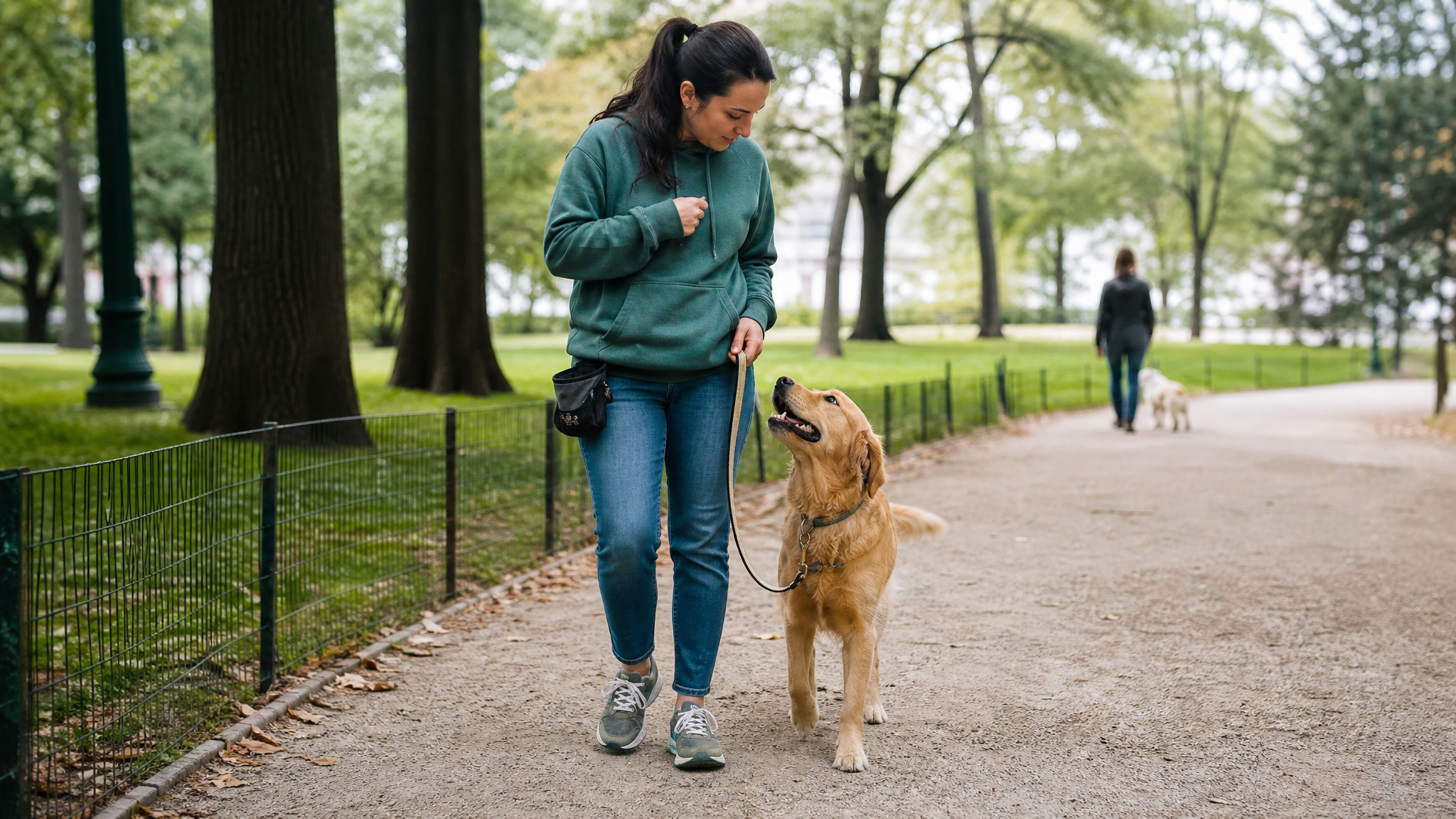
Begin with a simple pattern. Take one or two steps. If the leash stays loose, mark the moment with a word like “yes” and reward near your leg. Take a few more steps. Reward again. Change direction before your dog hits the end of the leash. Keep the session short enough that your dog can win.
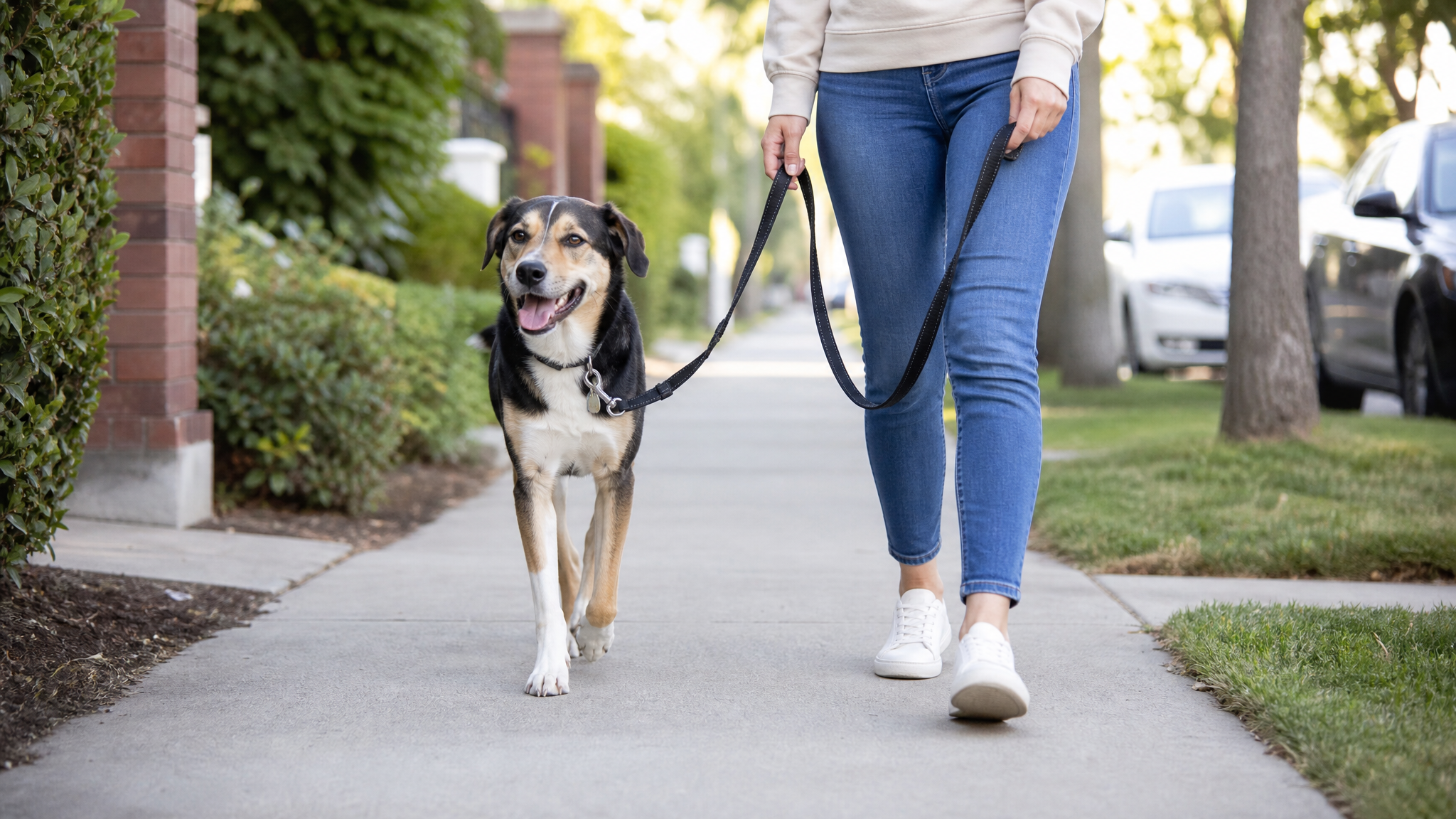
The first goal is not a full walk. The first goal is teaching the dog where reinforcement happens. If treats always appear near your left or right side, that area becomes valuable. If all the best smells only happen after dragging, dragging stays valuable. Dogs are not reading the training manual. They are reading the payoff system.
Reward the position you want
Many owners only react when the dog pulls. That teaches the dog that walking nicely is invisible and pulling gets the whole human involved. Flip that script. Notice the good stuff early.
Reward when your dog checks in, slows down with you, turns with you, walks near your side, or leaves slack in the leash near a distraction. Feed the reward where you want the dog to be, usually close to your leg. You can use treats, praise, permission to sniff, a change of direction, or access to something safe and interesting.
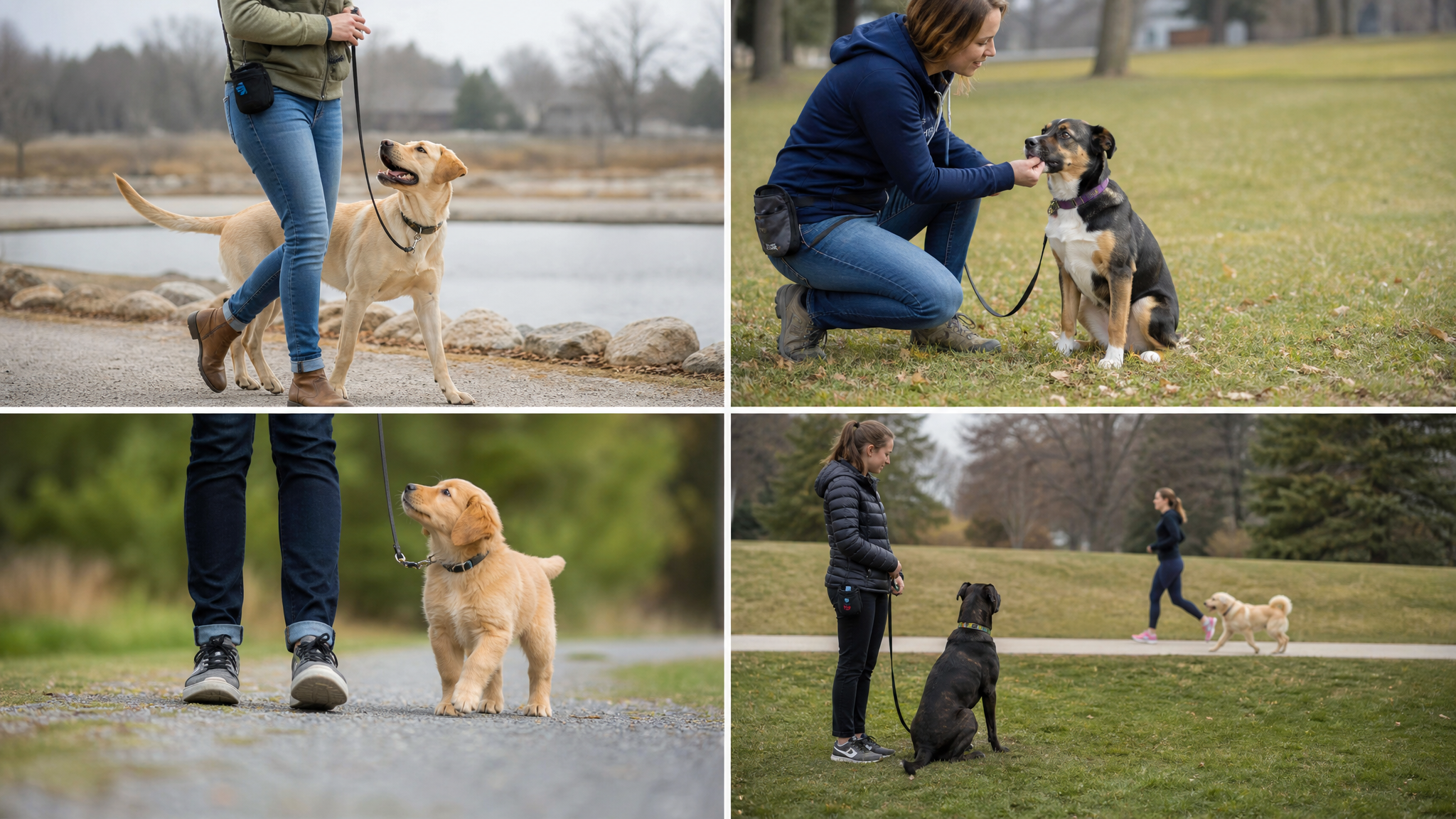
Food is useful because it is precise. Sniffing is powerful because it is the reason many dogs pull in the first place. A smart loose leash plan uses both: food to teach position and attention, sniffing as a real-life reward for walking politely toward something.
For example: your dog sees a patch of grass and starts to surge. Stop before the leash tightens fully. Wait for a small turn back, a glance, or a softening of the leash. Mark it, then walk together to the grass as the reward. That teaches the dog, “polite movement gets me there.” Much better than turning every shrub into a hostage negotiation.
What to do when the leash gets tight
When the leash tightens, do not yank back. Yanking often creates opposition: dog pulls, human pulls, everyone joins the world’s least charming tug-of-war. Instead, make tension change the walk.
Use one of three resets:
Stop and wait. The moment the leash tightens, stop moving. When your dog looks back, steps toward you, or slack appears, mark and continue. This is simple and clear, but it can be slow for dogs with a long pulling history.
Change direction. Before or just as the leash tightens, turn and walk the other way. Reward when your dog catches up near you. This teaches the dog to track your movement instead of locking onto whatever is ahead.
Scatter reset. Toss a few treats on the ground behind or beside you, let your dog sniff them out, then restart. This can lower arousal and help dogs who are too stimulated to think.
The key is consistency. If pulling works five times and fails once, many dogs will keep gambling. Dogs understand slot machines better than most humans do, which is worrying for both species.
Build walks in short loops
A common mistake is trying to train loose leash walking for the entire route immediately. Instead, use short loops. Walk ten calm steps, reward, release to sniff. Walk to the next driveway, reward, reset. Practice one side of the block, then go home. Quality beats mileage.
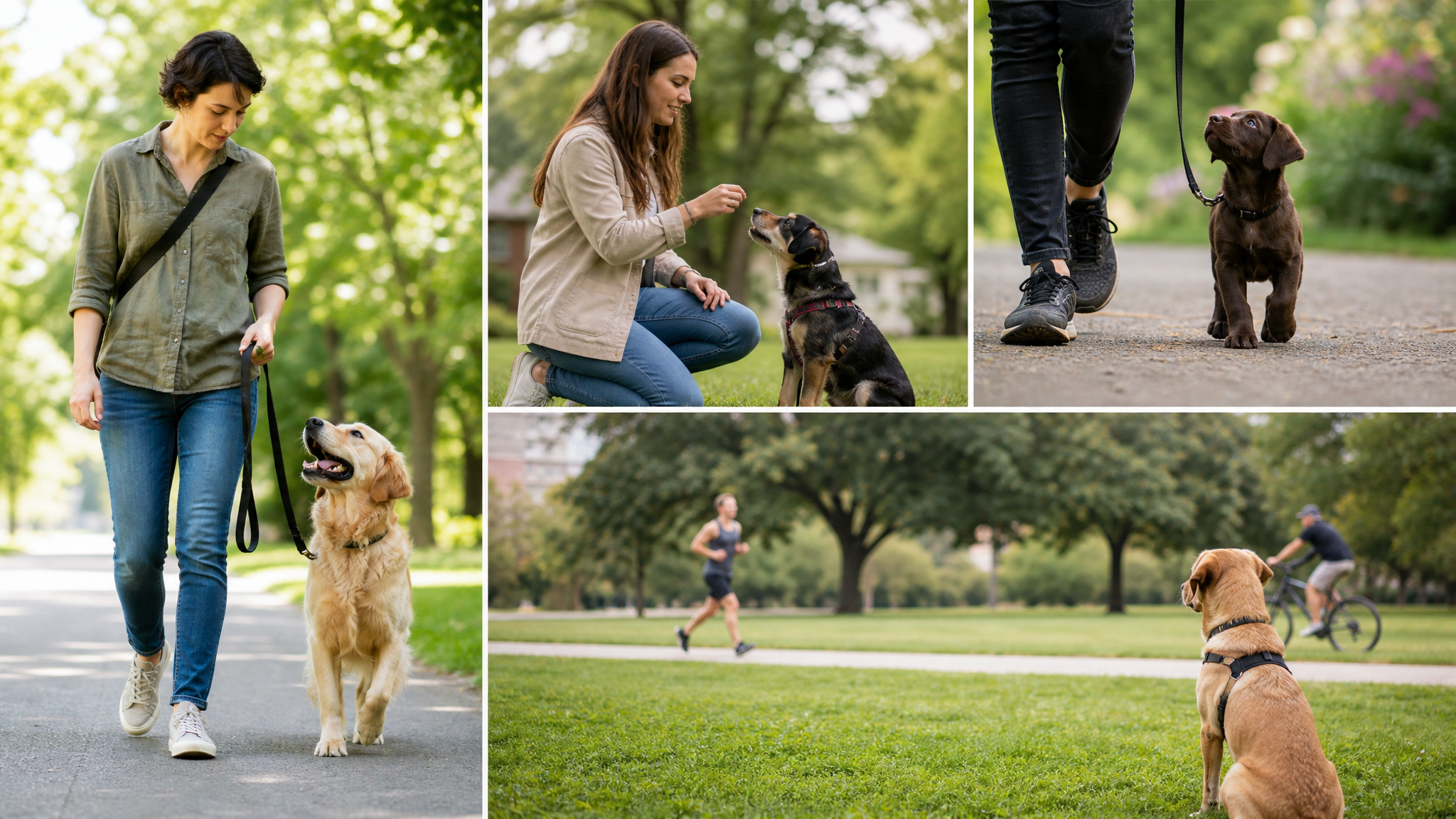
For puppies, short sessions are not optional. Young dogs have short attention spans, changing bodies, and very little experience with the world. A five-minute successful walk teaches more than a twenty-minute disaster tour. For adolescent dogs, short loops are still useful because their brains may temporarily behave like they were assembled during a power outage.
As your dog improves, stretch the distance between rewards. Do not remove rewards suddenly. Fade them like a dimmer switch, not like someone unplugged the building.
Handling distractions without losing the walk
Distractions are not proof your dog forgot everything. They are proof the environment got harder. Other dogs, squirrels, bikes, kids, food on the sidewalk, doorways, and busy corners all raise the difficulty.
The simplest rule is distance first. If your dog cannot think near a distraction, move farther away. Reward looking at the distraction calmly, checking back in, or choosing to move with you. If your dog is barking, lunging, or unable to take food, you are probably too close or asking too much.
Use predictable patterns around distractions. Say your dog’s name, mark a check-in, feed near your leg, then move in a gentle arc rather than straight toward the trigger. If your dog can pass calmly at thirty feet, practice there before trying fifteen. This is not avoiding training. It is training at a level where learning can actually happen.
If your dog is reactive, fearful, or powerful enough to be unsafe, get help from a qualified force-free trainer or behavior professional. Loose leash advice is not a substitute for behavior support when safety is on the line.
Equipment that helps without pretending to train for you
Equipment can make training safer and easier, but it does not replace training. A well-fitted harness, especially a front-clip or dual-clip harness, can reduce leverage for some pullers. A standard six-foot leash gives better feedback than a retractable leash for training. Treat pouch, comfortable shoes, and high-value rewards help more than people want to admit.
Avoid relying on pain or fear to control pulling. Tools that tighten, pinch, shock, or rely on harsh corrections can create fallout, especially around other dogs or people. If you are struggling with a large or strong dog, prioritize safety and professional help rather than escalating equipment on your own.
Retractable leashes are especially bad for teaching loose leash rules because they reward steady tension. The dog pulls, the line extends, and the universe says “great job.” Use them only in appropriate open areas after your dog understands leash manners, not as the main training tool.
A simple 14-day loose leash plan
Days 1–2: Pre-walk calm. Practice leash-on, door pauses, and short indoor or driveway steps. Reward calm starts.
Days 3–4: One-step and five-step games. In a boring place, reward near your leg every few steps. Change direction often.
Days 5–6: Short sidewalk loops. Pick a quiet route. Train for five to ten minutes, then end before the dog falls apart.
Days 7–8: Add sniff rewards. Use polite walking as the way to reach safe sniff spots. Make the environment part of the reward system.
Days 9–10: Practice mild distractions. Work at a distance from people, dogs, bikes, or busier streets. Reward check-ins and soft leash moments.
Days 11–12: Stretch reward spacing. Ask for longer stretches of loose leash walking, but return to frequent rewards when the environment gets harder.
Days 13–14: Real walk blend. Mix training blocks with relaxed sniffing. Use stop, turn, or scatter resets when tension returns.
This plan will not magically fix every dog in two weeks. It will, however, give you a repeatable structure. That is the point. Training works better when it becomes the walk, not a dramatic special event with a treat pouch and unrealistic optimism.
Common mistakes that keep dogs pulling
The biggest mistake is letting pulling work because you are tired. Understandable, but still expensive. If your dog drags you to every smell, the dog is practicing pulling for the entire walk.
Another mistake is walking too far too soon. Long chaotic walks build endurance for chaos. Short successful walks build skill.
Owners also reward in the wrong place. If you feed in front of your body while the dog is forging ahead, you may accidentally reward the dog for being out in front. Feed where you want the dog to return.
Finally, many people raise criteria too quickly. A dog who can walk nicely in the driveway may not be ready for the school pickup sidewalk, the Saturday farmers market, or a narrow path full of dogs. Training does not fail because the dog is “being bad.” It often fails because the lesson jumped three grades in one afternoon.
When to get professional help
Get qualified help if your dog lunges, barks intensely, redirects onto the leash or handler, pulls someone over, panics outside, or becomes uncontrollable around dogs, people, bikes, cars, or wildlife. Also get help if you have a large dog and physical safety is already a concern.
Look for a trainer who uses humane, reward-based methods and can explain their plan clearly. If the first answer is more force, more pain, or “show the dog who is boss,” keep shopping. Your shoulder and your dog’s nervous system deserve better customer service.
FAQ
How long does loose leash walking take to train?
Some dogs improve within a few sessions, but reliable everyday loose leash walking often takes weeks of consistent practice. Dogs with a long pulling history, high arousal, or reactivity may need more time and professional support.
Should my dog walk on my left side?
Only if that matters to you. Everyday loose leash walking is about a soft leash and safe responsiveness, not a required side. Pick one side for early training if it helps your dog learn where rewards happen.
Should I stop every time my dog pulls?
Stopping can work, but it is not the only option. You can also change direction, use a treat scatter reset, or increase distance from distractions. The important rule is that pulling should not reliably move the dog closer to the thing they want.
Are harnesses good for loose leash walking?
A well-fitted harness can help, especially for comfort and safety. Front-clip or dual-clip harnesses may reduce pulling leverage for some dogs. Harnesses do not train loose leash walking by themselves; they make the training easier to manage.
Why does my dog walk nicely after ten minutes but pull at the start?
The beginning of the walk is often the most exciting part. Practice pre-walk calm, doorway manners, and short reward-heavy starts. You can also begin with sniffing or simple focus games before expecting longer stretches of polite walking.
Can an older dog learn loose leash walking?
Yes. Older dogs can learn new leash habits, though it may take patience if pulling has worked for years. Keep sessions short, reward generously, and make the rules consistent.
Evergreen update note
Loose leash walking guidance should stay rooted in humane, practical training: reinforce the behavior you want, prevent pulling from paying off, reduce difficulty when the environment is too hard, and get qualified help when safety or reactivity is involved. Product preferences and training terminology may change, but those principles are durable.