Puppy Socialization Guide: Safe, Positive Exposure Without Overwhelming Your Puppy
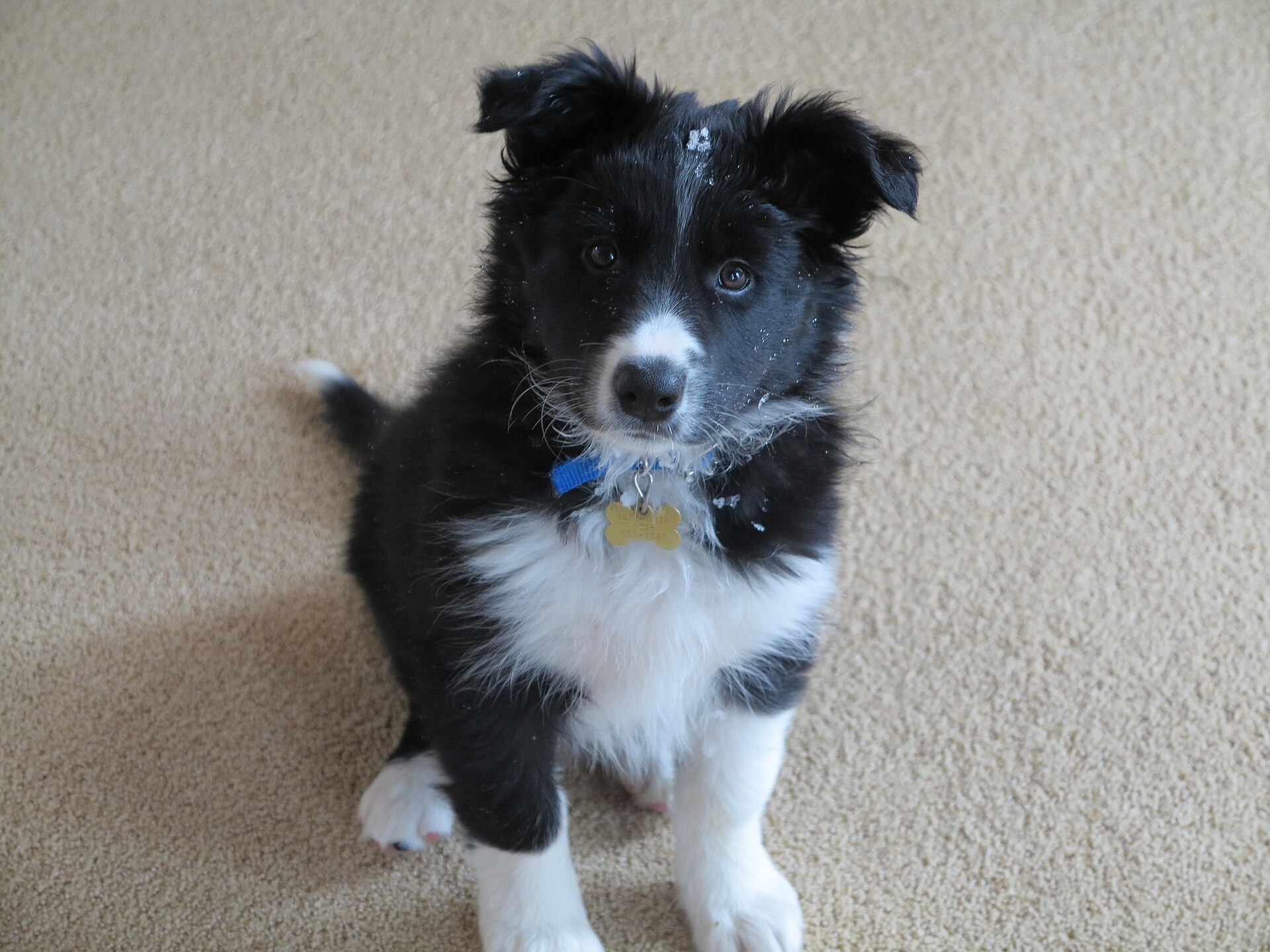
Learning about the world can start at home. Photo: Jeffrey Shellan / Wikimedia Commons, CC BY 2.0; resized source copy.
Puppy socialization means helping a puppy feel comfortable with ordinary people, animals, sounds, handling, and places—not making them greet everyone. Start with gentle experiences at a distance where your puppy can observe and disengage, pair those experiences with something they enjoy, and stop when they need space. Ask your veterinarian which settings and contacts are appropriate while vaccination protection is developing.
A puppy who watches a bicycle pass and then returns to sniffing has had a useful experience. A puppy held in place while strangers crowd around has not necessarily learned that strangers are safe. The difference is the puppy's experience, not the number of encounters you can tick off.
This puppy socialization guide is an editorial synthesis of veterinary-behavior guidance, not an individualized medical or behavior plan. No veterinarian has reviewed this article specifically.
When is the puppy socialization window?
The American Veterinary Society of Animal Behavior's puppy socialization statement identifies the first three months of life as the primary and most important period. During this early developmental window, carefully managed experiences help puppies become familiar with the world they will live in.
That is a reason to start thoughtfully—not a deadline that justifies rushing. AVSAB explicitly couples early exposure with avoiding excessive fear, withdrawal, and avoidance. More encounters are not automatically better encounters.
Social learning also does not switch off at a particular birthday. Continue suitable positive experiences into adolescence and adulthood. An older puppy with limited early experience can still learn; a fearful puppy may need a more individualized approach and veterinary guidance. Neither early socialization nor a class can guarantee an adult dog will never develop fear or aggression.
If you obtained your puppy recently, ask the breeder, shelter, or previous caregiver what they actually experienced: people, household sounds, surfaces, handling, and other animals. “Well socialized” is less useful than specific examples and the puppy's responses.

Everyday surfaces and household activity are part of a puppy's world. Photo: Przemysław Jahr / Wikimedia Commons, public domain; resized source copy.
Can you socialize a puppy before they are fully vaccinated?
Socialization need not mean unrestricted public-ground access. AVSAB supports appropriate socialization before puppies are fully vaccinated, while recommending risk reduction and carefully managed classes. That is not a promise that a particular park, pavement, yard, or puppy gathering is safe for your puppy.
Talk to your veterinarian about both infectious-disease risk and behavioral development. Local disease conditions, your puppy's health and vaccine history, and the actual environment matter. A generic age chart cannot make that decision.
Bring these questions to the conversation:
- Which places and types of contact should we avoid locally right now?
- Is observing from my arms or a secure carrier appropriate for this puppy, and how should I prevent contact with contaminated surfaces?
- Are visits with a particular known, healthy, appropriately vaccinated dog suitable, and where should they happen?
- What health, vaccination, parasite-control, and sanitation requirements should a puppy class meet?
- What should change after future veterinary visits, or if there is a local disease outbreak?
Meanwhile, home offers useful opportunities: a visitor who gives the puppy space, a comfortable brush briefly touching the shoulder, a different nonslip surface, or a quiet household sound. Even home and private yards are not automatically free of disease risk; tell your veterinarian about other dogs and any known contamination.
Avoid dog parks and heavily dog-trafficked areas with unknown health histories as default early-socialization venues. Do not use shared bowls or unknown dogs as a shortcut to “getting the socialization done.” If your puppy seems ill, skip outings and classes and contact your veterinarian.
Use a low-pressure exposure loop
This is a practical way to apply the principles—not a validated protocol or a timed prescription. Choose one manageable experience and adjust it to your puppy.
- Set up an easy version. Use distance, low volume, a barrier, or a quieter location. Keep an exit available and secure the puppy against escape without holding them near something frightening.
- Let the puppy notice. They do not have to approach, sit perfectly, or accept a greeting. Looking briefly can be enough.
- Pair the experience with something pleasant. Offer a small suitable treat, gentle play, or attention the puppy enjoys. Do not lure them closer to a person or object they are avoiding.
- Watch the whole response. Can they turn away, move normally, explore, and recover after noticing? Eating alone is not proof of comfort.
- Finish while it is still easy. Step away, return home, or take a quiet break. Repeat another time before increasing difficulty.
For example, a puppy notices a person wearing a large hat from across a quiet room. The person stays sideways and does not reach. You offer a treat near you; the puppy looks away and resumes exploring. That may be the entire session. Next time, repeat that easy version rather than immediately adding petting, children, and a noisy doorbell.
Change one feature at a time: distance or duration or intensity. If the puppy struggles, make the next attempt easier. Do not wait for them to “give in.”
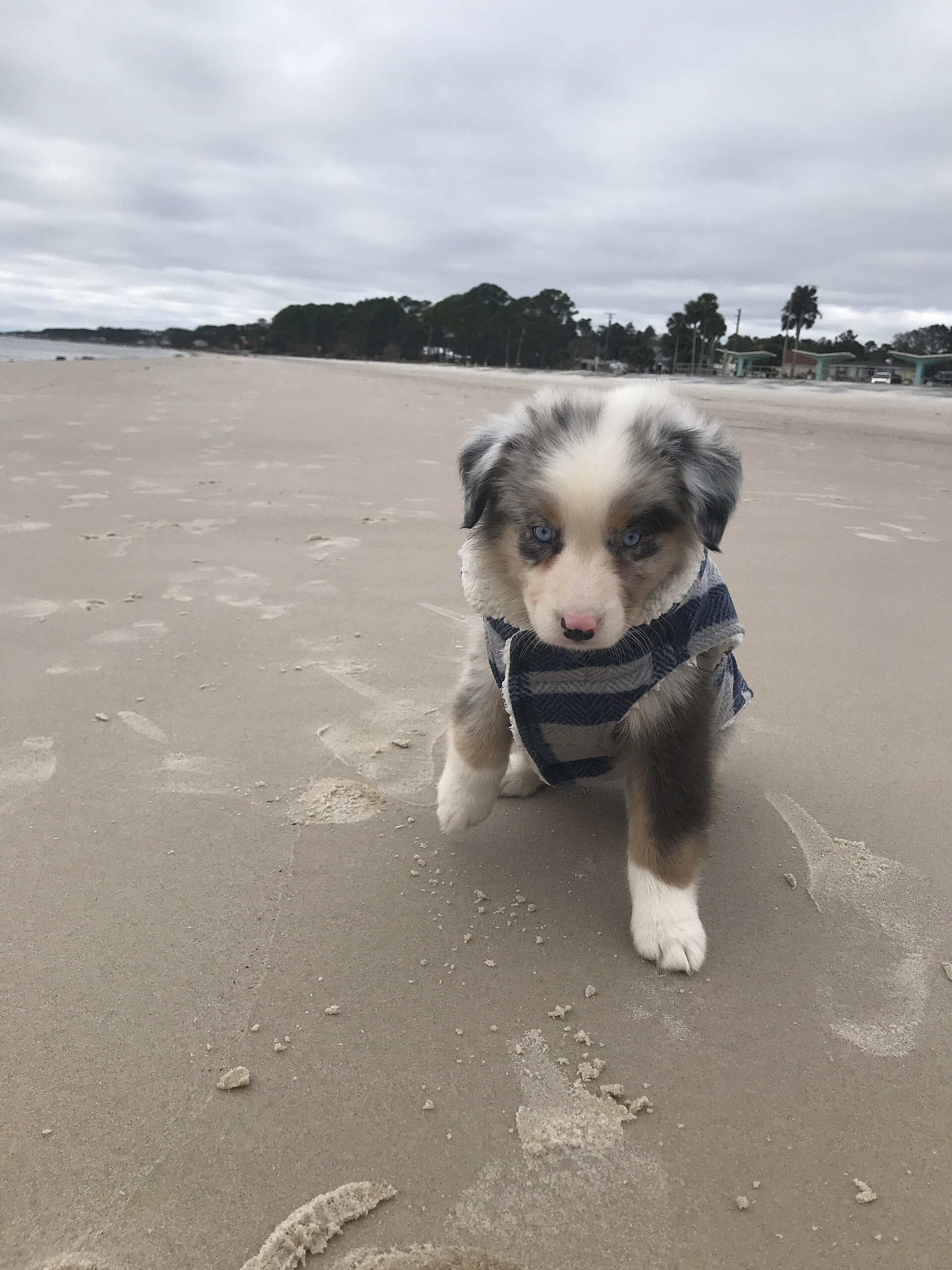
Outdoor exposure needs an individual risk conversation; this illustrative photo does not establish that a beach is suitable for an unvaccinated puppy. Photo: Gorfiest / Wikimedia Commons, CC0; resized source copy.
Read fear and overstimulation before pushing further
Look at the situation and several signals together. A yawn may mean tiredness; lip licking may follow food. Neither is a diagnosis by itself. Equally, a wagging tail does not automatically mean a puppy wants contact.
| What you notice | What to do | | --- | --- | | Loose movement, voluntary exploration, ability to look away and return to ordinary activity | Keep the experience easy; there is no need to intensify it immediately. | | Repeated turning away, backing up, crouching, tucked tail, scanning, or declining normally welcome food | Pause and increase distance. Consider fatigue, hunger, discomfort, and the environment rather than labeling the puppy stubborn. | | Freezing, sustained hiding, trembling, frantic escape attempts, growling, snapping, or escalating distress | End the encounter and move to safety. Prevent further approaches; seek professional guidance when fear is marked, recurring, or worsening. | | Increasingly frantic activity, rough mouthing, difficulty settling, or repeated attempts to leave | Reduce stimulation and offer a quiet break; do not assume more play is the answer. |
Stillness is not the same as relaxation. A puppy held tightly or cornered can become very quiet while remaining frightened. Give them an exit rather than rewarding the appearance of compliance.
Do not punish a growl or force another greeting to “end on a good note.” If an encounter went badly, leaving safely is a good ending. Comfort your puppy if they seek it, protect them from further pressure, and make any future exposure gentler. For a broader signal-by-signal reference, see our dog body language guide.

A still photo cannot tell us whether a puppy is comfortable, tired, or worried. Watch movement and context. Photo: Slyronit / Wikimedia Commons, CC BY-SA 4.0; resized source copy.
A puppy socialization checklist without quotas
Use this as a menu for your real life, not an assignment to complete in one week. Select only appropriate, low-risk experiences. Track how the puppy felt, not how many things you presented.
| Experience | An easier starting version | What to avoid | | --- | --- | --- | | People with different appearances, clothing, and movement | Observe one calm person from a comfortable distance | Crowding, looming over the puppy, or insisting on petting | | Children | Watch quiet activity with an adult managing both child and puppy | Chasing, grabbing, hugging, or leaving them together unsupervised | | Other dogs | Start with observation; discuss suitable known dogs and settings with your vet | Uncontrolled group play, unknown health histories, or forced face-to-face meetings | | Household sounds | A brief sound at low intensity or from another room | Loud recordings or appliances switched on beside a trapped puppy | | Surfaces and objects | A stable nonslip mat or stationary object with room to walk around it | Slippery flooring, unstable obstacles, or dragging the puppy forward | | Handling and grooming | A light touch, reward, and pause while the puppy can move away | Holding the puppy down or continuing through struggling | | Transport and veterinary settings | Explore a secure carrier at home; ask about a low-stress clinic introduction | Unsafe restraint, uncontrolled clinic-floor access, or forcing a long trip | | Everyday outdoor movement | Observe traffic or a bicycle from a vet-approved location at a comfortable distance | Busy roadside exposure or testing how much noise the puppy will tolerate |
A useful log can be as simple as:
- Experience: One visitor sitting quietly across the room.
- Response: Puppy watched, ate a treat, then explored elsewhere.
- Adjustment: Repeat with the same distance and no touching.
- Recovery: Returned to usual play and rest afterward.
That example is illustrative, not a documented Dogthread training session. If your log repeatedly says “hid,” “froze,” or “could not settle,” stop increasing the challenge and ask for help.
Choose a puppy class by its methods and setup
A well-run class is more than a room full of puppies. Ask whether you can observe a session without your puppy and discuss suitability with your veterinarian before enrolling.
Look for:
- Clear health-entry requirements, illness exclusions, vaccination checks, and parasite-control expectations developed with veterinary input.
- Cleanable surfaces and a specific cleaning and disinfection process, including prompt waste removal.
- Reward-based instruction, space between puppies, barriers when needed, and permission to observe or leave.
- Closely supervised interactions matched to each puppy's size, play style, and comfort, with frequent pauses.
- An instructor who can describe how they respond to hiding, growling, overarousal, and a puppy who does not want to play.
- A referral plan when a puppy needs veterinary or individualized behavior support.
Walk away from forced greetings, prolonged uncontrolled wrestling, punishment for fear signals, leash jerks, or promises to establish dominance. A “positive” label is not enough if the actual methods involve intimidation. AVSAB's How to Choose a Trainer guidance emphasizes methods, education, observing stress, and advocating for your dog; credentials alone do not guarantee quality.
A puppy who watches comfortably behind a barrier can be making progress. If the classroom is consistently overwhelming, a quieter or individual format may fit better.
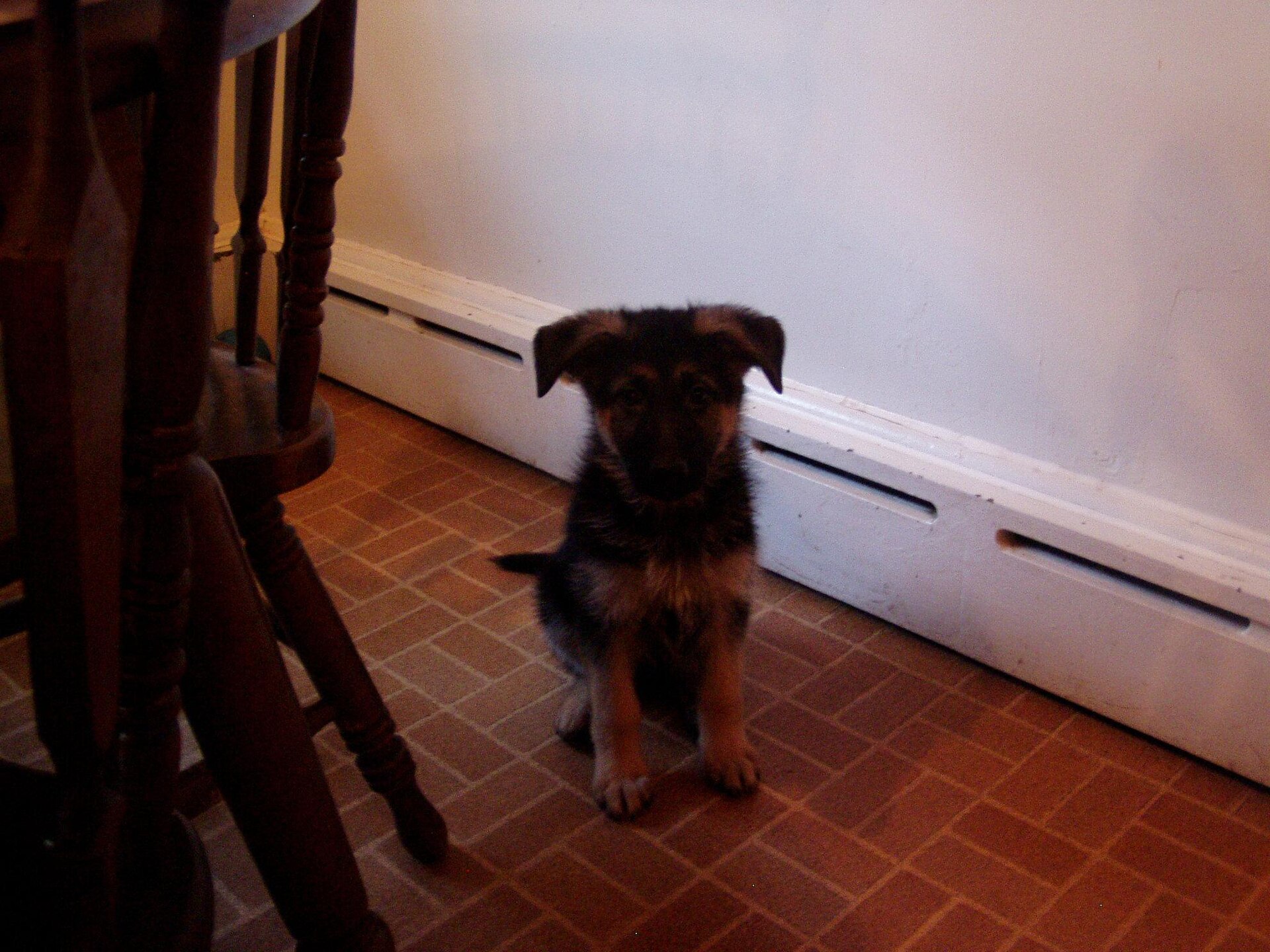
Class readiness is individual; a breed label does not tell you how much stimulation a puppy can handle. Photo: Lord Laitinen / Wikimedia Commons, CC0; resized source copy.
Fit socialization around rest and normal puppy life
Do not turn every waking moment into an outing. Toilet needs, meals, play, comfortable rest, and simple household routines still matter. Plan a small experience when the puppy is reasonably settled, and leave room for recovery afterward.
Some days, a short look at a passing delivery vehicle is enough novelty. On others, the right choice is familiar play and sleep. There is no universal daily encounter quota or session duration that guarantees a good result.
Use our first-12-weeks puppy training schedule for the wider routine and calm-greeting guide for managing visitors. A comfortable resting space can help; our crate-training guide explains how to build that association without punishment.
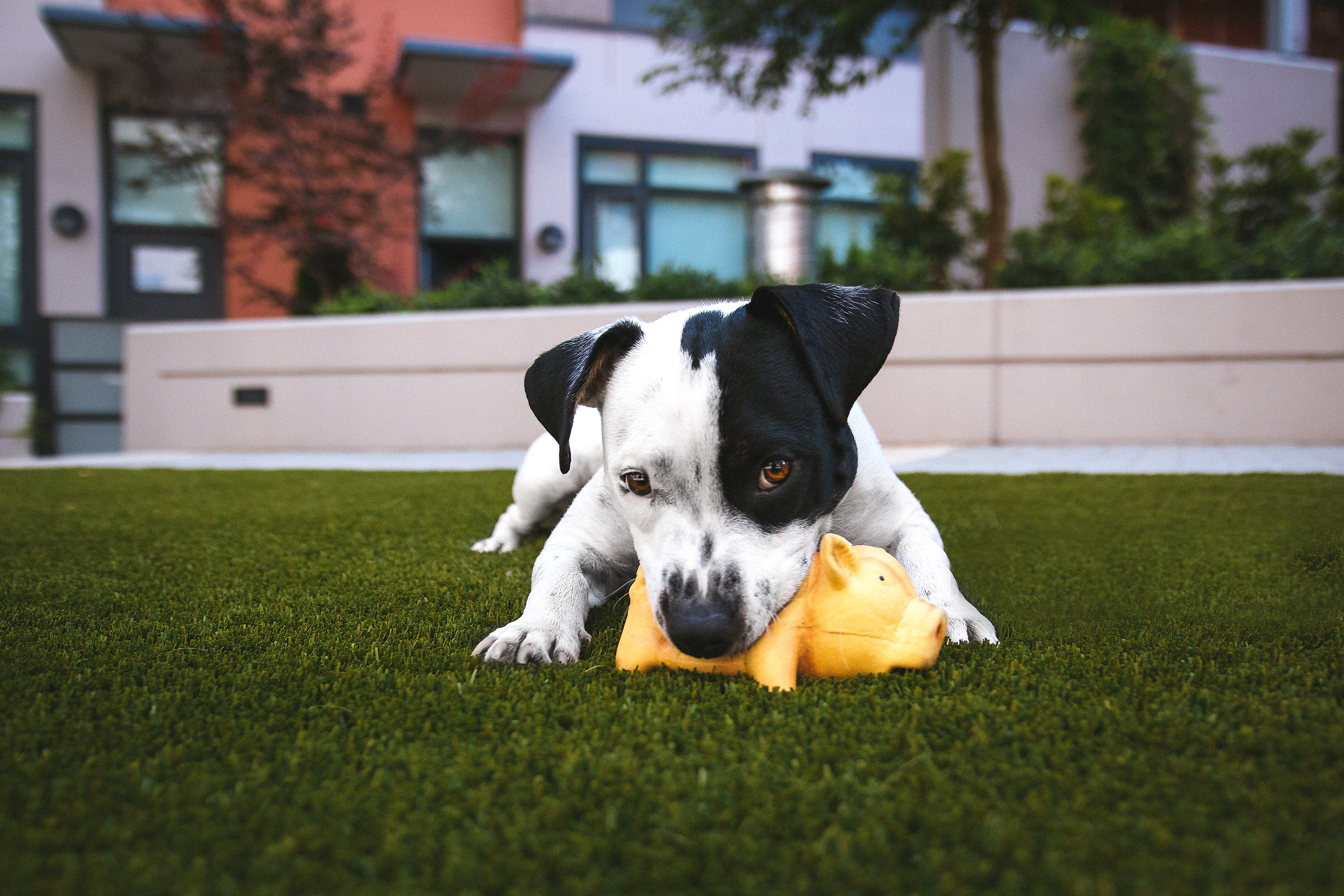
Familiar play can be a break from novelty, not another test. Photo: Justin Veenema / Wikimedia Commons, CC0; source image unchanged.
When to seek veterinary behavior help
Contact your veterinarian when fear is intense, persistent, worsening, or interfering with eating, resting, handling, or ordinary activity. Seek help early for repeated freezing, panic, escape attempts, or growling and snapping around routine encounters; do not wait for a bite or assume a puppy will simply grow out of it.
A sudden behavior change also deserves a medical assessment because pain or illness can affect behavior. Keep people and other animals safely separated where needed. If someone is injured, obtain appropriate medical or veterinary care.
Your veterinarian can check health factors and help arrange a referral to a veterinary behaviorist or appropriately credentialed reward-based behavior professional. Ask what qualifications and methods they use. A group puppy class is not a substitute for assessment of substantial fear, anxiety, or aggression.
While waiting, reduce exposure to known triggers and keep routines predictable. Note what happened, how far away the trigger was, and how long recovery took. Record video only if it can be done safely without recreating distress.
FAQ
Does my puppy need to meet every dog or person?
No. Comfortable observation and choosing not to interact are useful outcomes. Select suitable encounters rather than treating every passing person or dog as a required greeting.
Should I wait until all vaccinations are finished?
Not all socialization requires public-ground access. AVSAB supports appropriate early socialization before full vaccination, with risk reduction. Ask your veterinarian which environments, contacts, and classes fit your puppy's health and local disease conditions; this guide does not prescribe a vaccine schedule.
What should I do if my puppy is scared during socialization?
Stop the interaction, create distance, and give the puppy a safe exit. Do not pull them closer or force them to remain until they stop reacting. Recurring or substantial fear warrants veterinary guidance and a more individualized plan.
How many new experiences should a puppy have each day?
There is no universal target that suits every puppy. Choose manageable experiences, allow recovery, and stop before overload. One comfortable observation is more useful than several distressing encounters.
Is it too late to socialize a puppy after the early window?
No. Continue gradual, positive learning beyond the first three months, but do not try to compensate for missed experience with intense exposure. A frightened older puppy may need professional support to progress comfortably.
Is a puppy class better than a dog park?
A carefully managed, veterinarian-appropriate puppy class can offer controlled learning and health safeguards. A dog park involves unknown dogs, unpredictable interactions, and less control over sanitation, so it is not the default early-socialization option. The quality and suitability of the individual class still matter.
Sources and how this guide was prepared
Dogthread reviewed the sources below on October 27, 2026. This is a practical editorial synthesis, not a systematic review, hands-on class evaluation, veterinary consultation, or guarantee of behavioral outcomes. The exposure loop and checklist are editorial applications of the source principles. Photos illustrate puppies and ordinary settings; none documents a training result or proves disease safety.
- AVSAB: Puppy Socialization Position Statement. The statement is dated 2008 and remains linked from AVSAB's current resource page. It supports the early-window discussion, controlled pre-full-vaccination socialization, avoiding overwhelming exposure, class safeguards, and seeking veterinary guidance for fear.
- AVSAB: How to Choose a Trainer. Used for method selection, credentials, stress awareness, and referral boundaries.
- AVSAB: Current position statements and 2025 board clarification. Confirms its reward-based-training position and links to the statements above.
Update note: Recheck these source statements and class-selection guidance when they change. Local disease conditions and your puppy's veterinary advice take precedence over a general online guide.