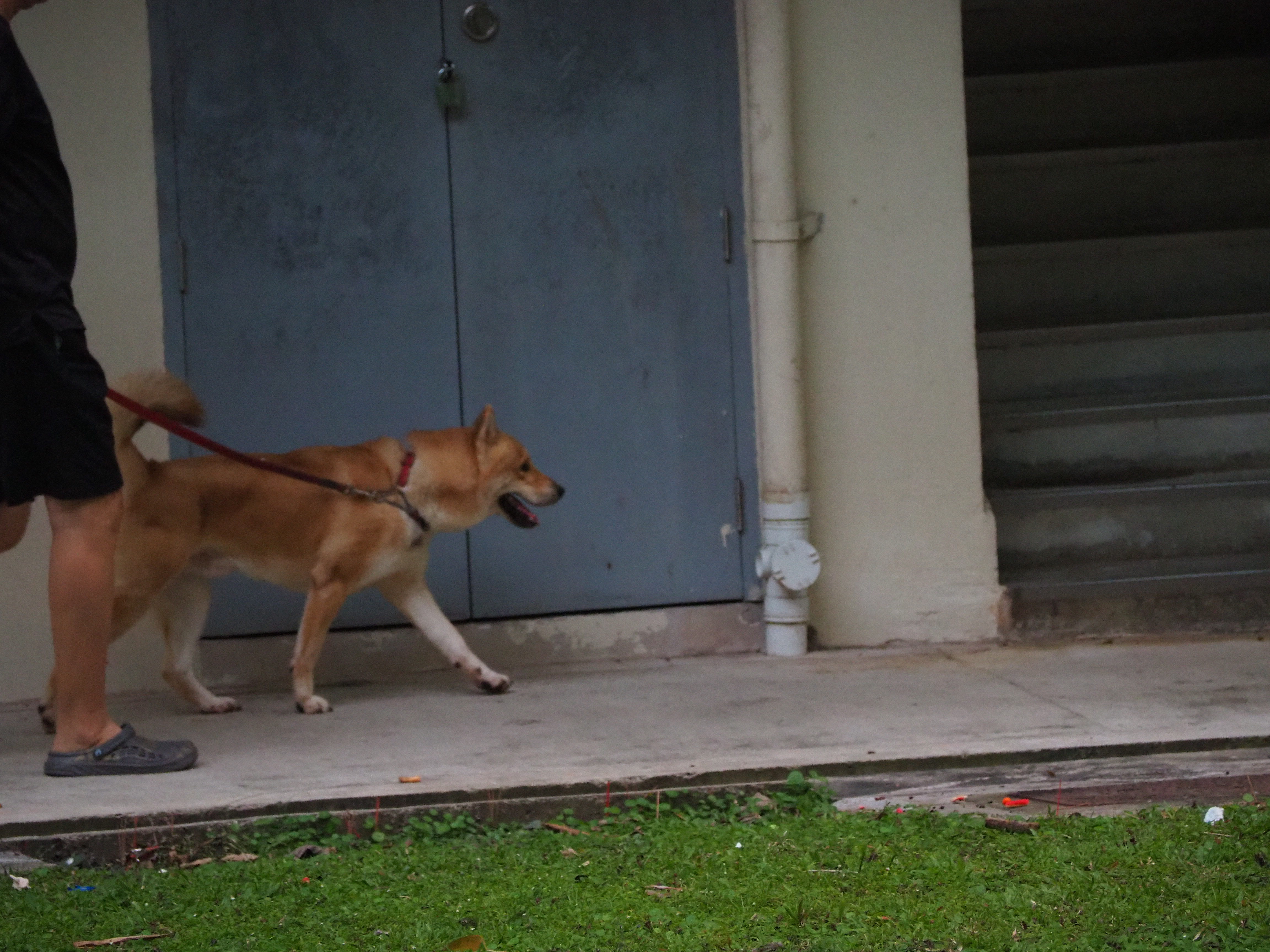
Why Dogs Pull on Leash and How to Reset the Walk
Dogs pull on leash because pulling usually works. It gets them closer to smells, grass, people, other dogs, doorways, squirrels, food wrappers, and all the thrilling sidewalk news humans rudely try to walk past. The reset is not to overpower the dog. The reset is to stop letting tight-leash movement pay, reward the moments of slack you want repeated, and restart the walk at a difficulty your dog can actually handle.
If your dog is lunging, barking, panicking, redirecting onto the leash, or strong enough to pull someone over, treat that as a safety issue and get help from a qualified reward-based trainer or behavior professional. This article is practical owner education, not veterinary or certified trainer advice.
The short answer
Most dogs pull because the environment is rewarding and humans move slowly. When a dog leans into the leash and the person keeps walking, the dog learns a simple rule: tension moves the walk forward.
To reset the walk, use a new rule: tight leash pauses or changes direction; soft leash makes good things happen. Reward check-ins, feed near your leg, use sniffing as a reward, and practice in short sessions before expecting a perfect neighborhood lap. You are not trying to turn your dog into a tiny parade soldier. You are teaching that a loose leash is the easiest way to access the world.
Why pulling becomes such a strong habit
Pulling is self-rewarding. A dog pulls toward a smell and reaches it. Pulls toward another dog and gets closer. Pulls out the front door and the adventure starts. Pulls through the first five minutes of the walk and eventually gets to the park.
That history matters. Even if you hate the pulling, your dog may have practiced it hundreds of times. From the dog’s view, pulling is not rude. It is a tested transportation system.
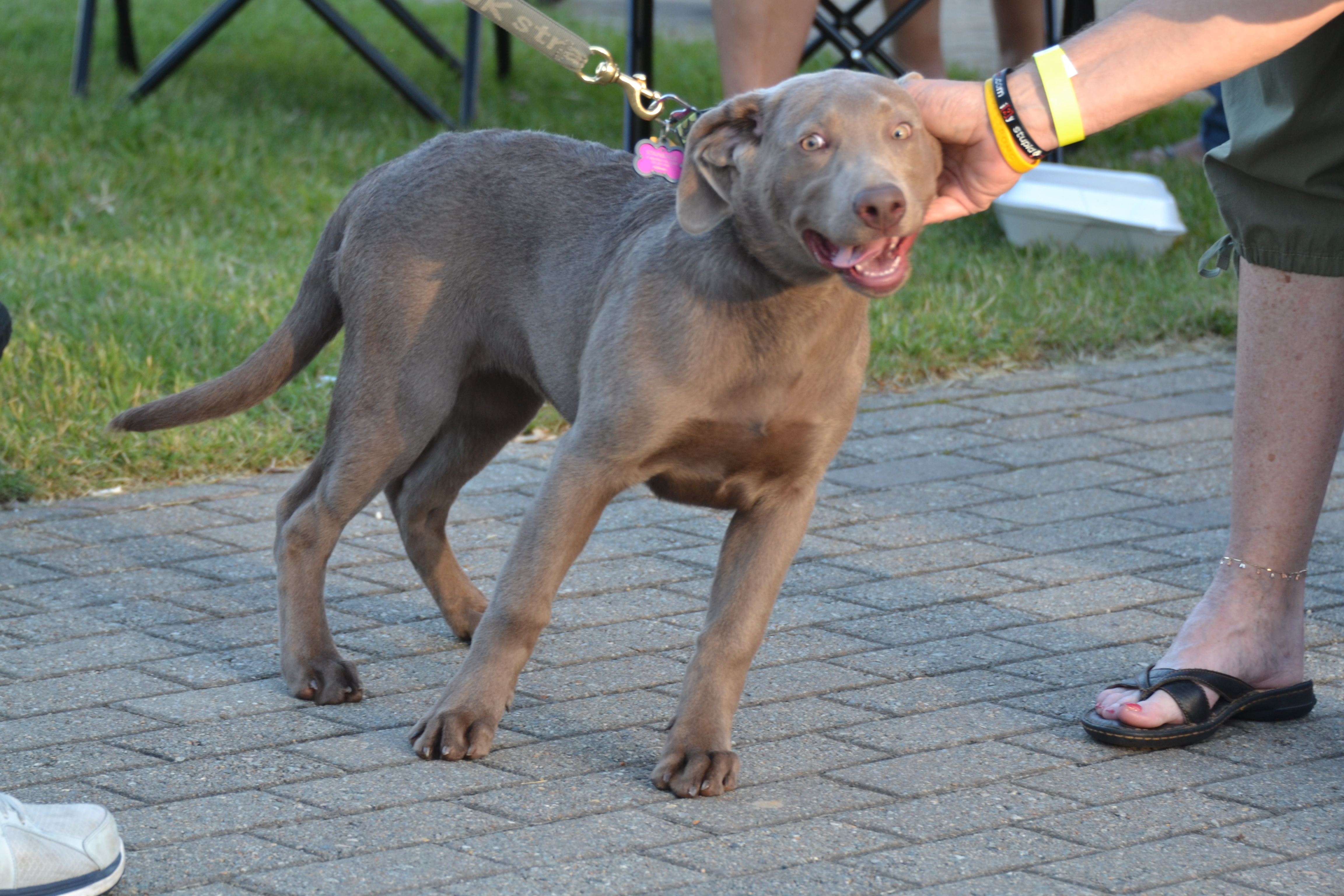
Dogs may also pull because they are excited, under-exercised, over-stimulated, worried, frustrated, adolescent, or new to leash walking. Some dogs naturally walk faster than people. Some have learned that a tight leash predicts a tense handler, which makes the whole outing more frantic. And some are just young dogs running the latest version of the “everything is urgent” operating system.
The useful question is not “Why is my dog being stubborn?” It is “What is my dog trying to reach, and what has the leash taught them so far?”
Reset the walk before you leave the house
The first reset happens before the sidewalk. If the leash appears and your dog launches into a full concert, the opening minutes of the walk will probably be rough.
Practice calm starts. Pick up the leash, reward calm behavior, and put it down. Clip the leash on, feed a treat, and unclip it. Walk to the door, pause, reward four paws on the floor, then open the door only when your dog can hold together for a second.
This is not about draining joy out of the walk. It is about teaching your dog that calm behavior opens the world. A dog who blasts through the door already believes forward pressure works. You want the first lesson of the walk to be: staying connected gets us moving.
Use the three-part leash reset
When the leash gets tight, do not yank back and start a physics argument. Use a clean reset.
First, stop forward progress. Plant your feet or turn gently before your dog drags you all the way to the target. Pulling should not reliably deliver the thing your dog wants.
Second, wait for a tiny useful choice. That might be a glance back, a step toward you, a softer leash, a sit, or even a half-second of attention. Mark it with a word like “yes.”
Third, restart with a reward. Feed near your leg, move forward together, or release your dog to sniff if it is safe. The restart matters because it teaches the dog what makes the walk continue.
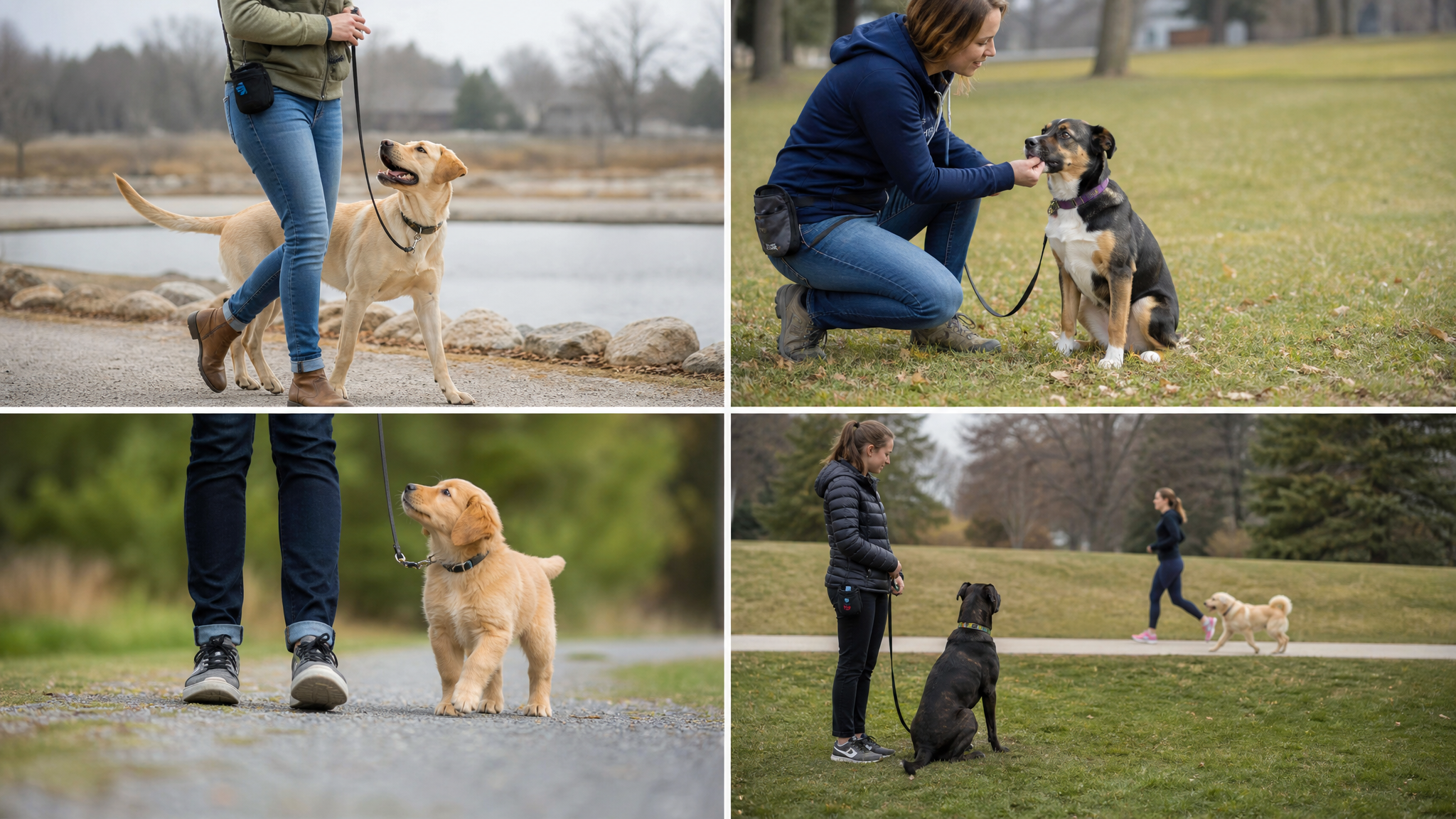
The reset should feel boring and predictable. Tight leash: movement changes. Soft leash: movement returns. No yelling, no dramatic speeches, no ten-minute courtroom argument with a Labrador.
Reward slack before your dog pulls
A lot of owners only become interesting after the dog pulls. The dog walks nicely for six steps and gets nothing. Then the leash goes tight and suddenly the human talks, stops, turns, fusses, and becomes a whole customer service department.
Flip the pattern. Reward your dog while the leash is still soft. Reward check-ins, slowing down with you, walking near your side, turning when you turn, or choosing not to surge toward a distraction.
Food is useful because it is precise. Feed near your leg so your dog learns where reinforcement happens. Sniffing is also a powerful reward, especially for dogs who pull toward scent. If your dog walks politely toward a patch of grass, release them to sniff. That teaches the real-life rule: polite walking gets you to the good stuff.
Start in boring places
Do not teach leash manners for the first time beside the dog park gate, school pickup line, trailhead, or a squirrel with main-character energy. Start where your dog can think: hallway, driveway, backyard, empty parking lot, quiet street, or calm path.
Take a few steps. Reward slack. Change direction. Reward the dog for moving with you. End after a short win. The first goal is not distance. The first goal is clarity.
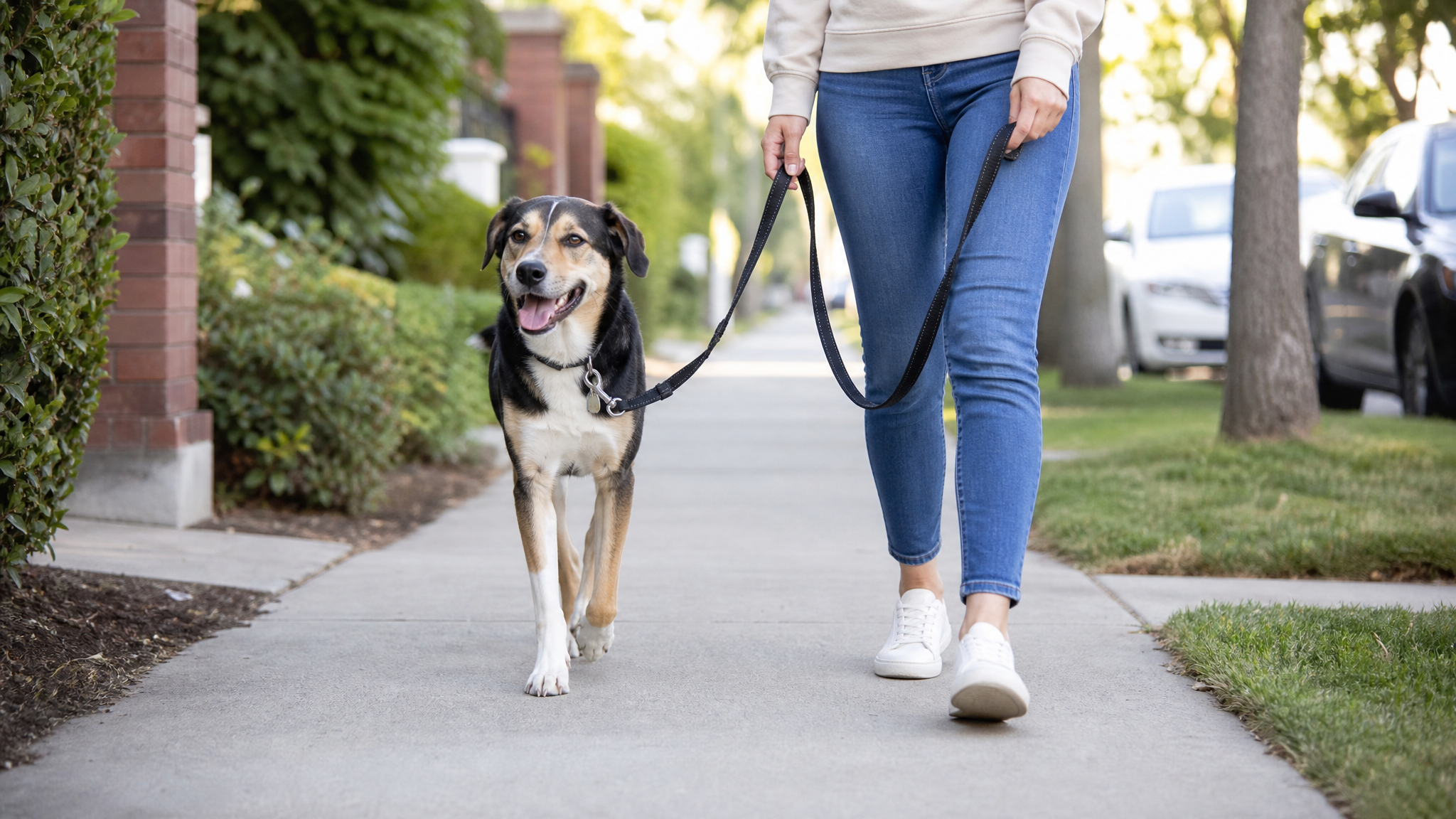
Short sessions beat long chaotic walks. If your dog can only manage two minutes of polite movement, use those two minutes well. Then switch to a sniff break, go home, or drive to a quieter spot. Long walks full of pulling do not fix pulling. They build stamina for pulling. Fitness culture has done enough damage already.
What to do when the walk falls apart
If your dog starts pulling hard again, assume the walk became too difficult. That does not mean your dog forgot everything. It means the environment got louder than the lesson.
Use one of these resets:
Stop and wait. When the leash tightens, stop. Wait for slack or a check-in, then mark and continue. This is simple, but it can be slow with dogs who have pulled for years.
Turn and go. Before your dog hits the end of the leash, turn gently and walk the other way. Reward when your dog catches up. This teaches your dog to track you instead of locking onto whatever is ahead.
Scatter and restart. Toss a few treats on the ground beside or behind you. Let your dog sniff them out, breathe, and restart. This helps dogs who are too excited to take a tidy treat from your hand.
Add distance. If the trigger is another dog, person, bike, stroller, or wildlife, move farther away. Distance is not failure. It is how you turn a meltdown into a teachable moment.
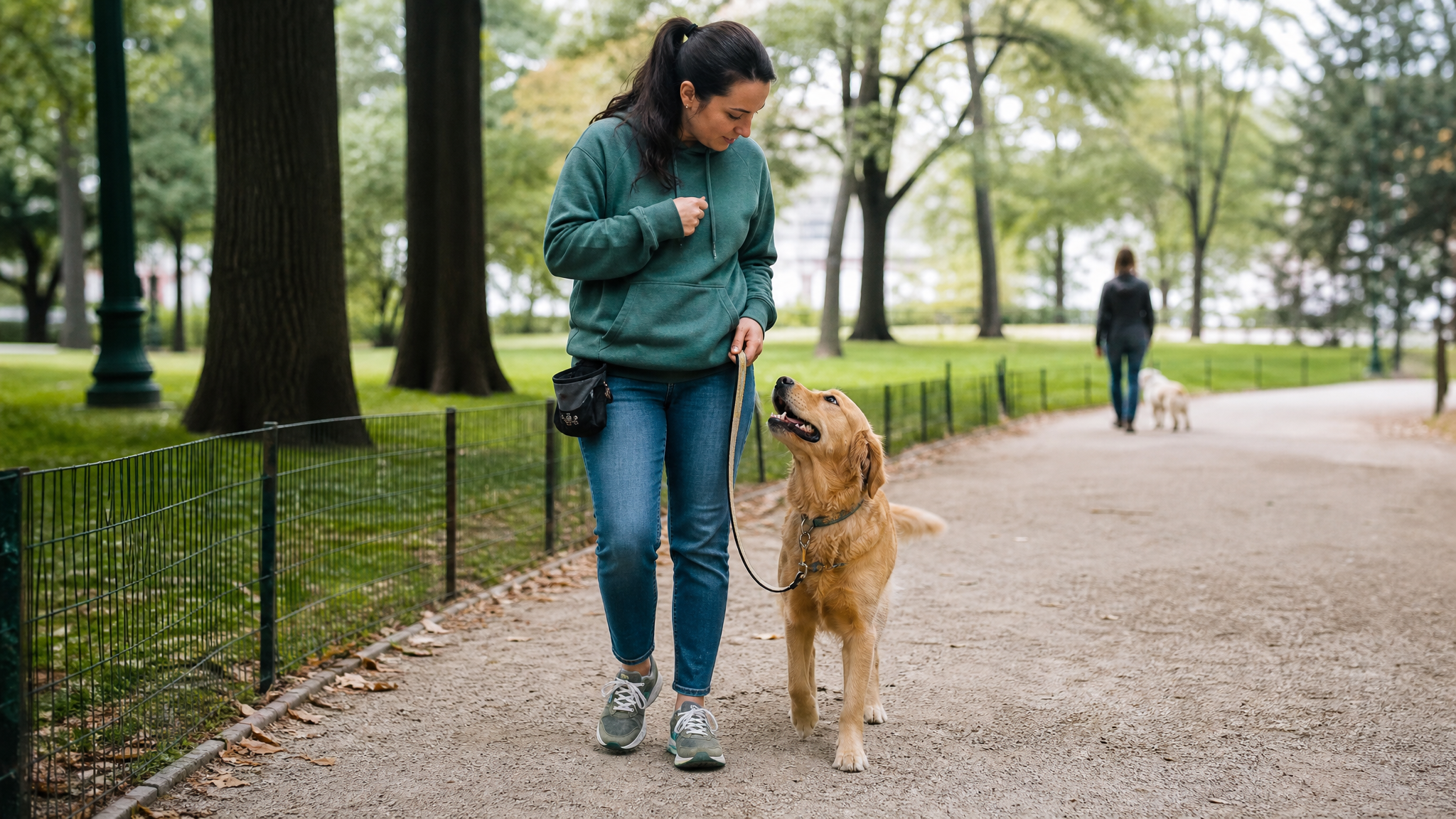
If your dog is barking, lunging, unable to eat, or physically hard to control, you are probably too close or the situation is not a normal leash-manners problem. Get support before it becomes unsafe.
Use equipment as a seatbelt, not the whole training plan
A comfortable, well-fitted harness can help many dogs, especially strong pullers or dogs with sensitive necks. Front-clip or dual-clip harnesses may reduce leverage for some dogs. A standard six-foot leash is usually easier for training than a retractable leash because it gives clearer feedback.
But equipment does not teach the rule by itself. A harness can make the dog easier to manage while you teach. It cannot explain that slack leash makes forward movement happen. That part is still your job. Terrible news for anyone hoping to buy one magic object and be done.
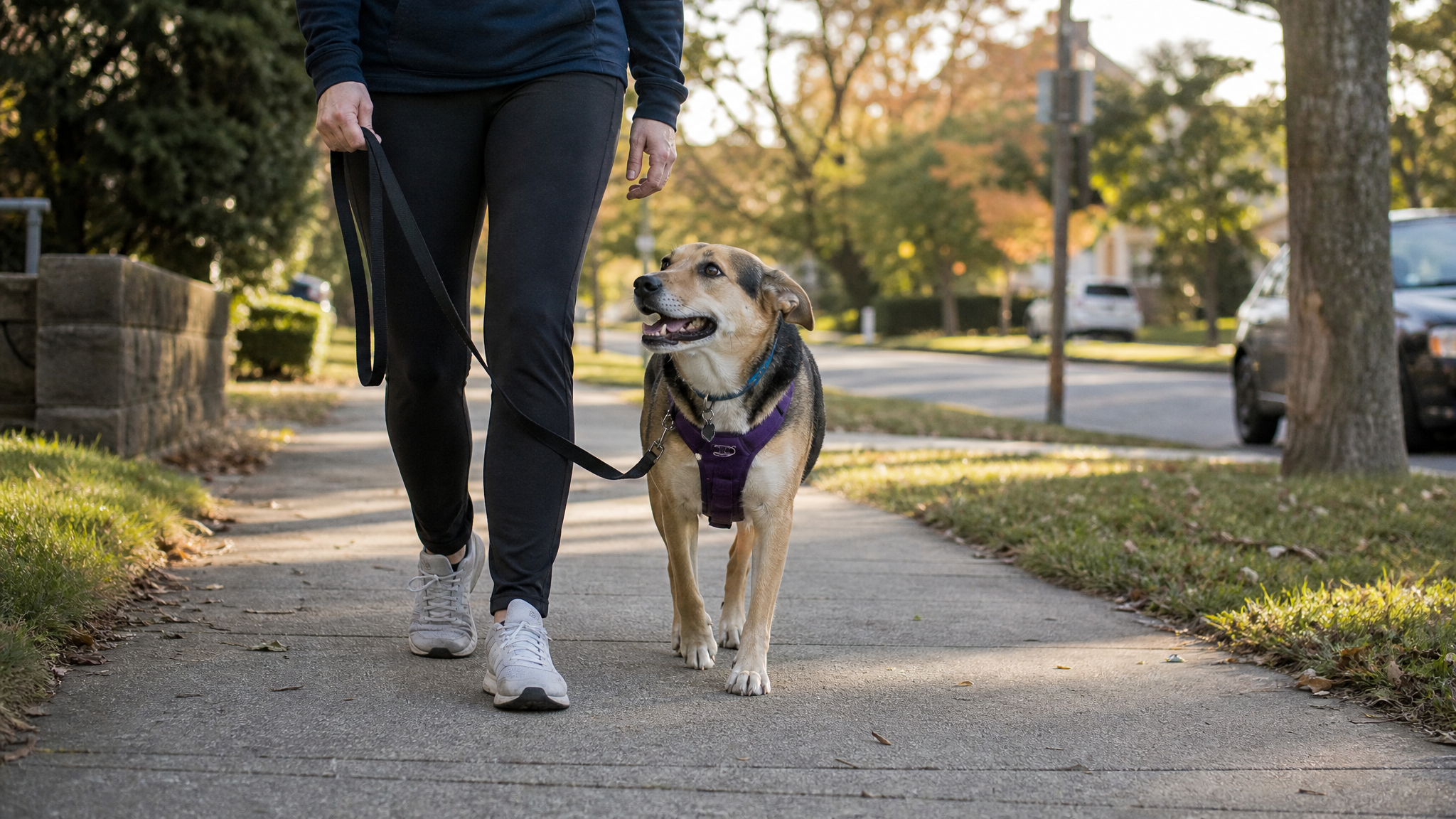
Avoid relying on tools that work mainly through pain, fear, or harsh correction. They can create fallout, especially around other dogs, strangers, children, or noisy streets. If safety is already a problem, the better move is a qualified professional, not escalating gear in the aisle at the pet store like you are shopping for medieval plumbing.
A practical five-minute reset routine
Use this when your dog is already in a pulling habit and you need a simple structure.
Minute 1: Calm start. Clip the leash on only after a moment of stillness. Step outside, pause, reward attention, and begin slowly.
Minute 2: Reward near your leg. Walk a few steps in a low-distraction area. Mark and reward any slack leash or check-in. Feed where you want your dog to return.
Minute 3: Add one sniff reward. Walk politely toward a safe sniff spot. If the leash stays soft, release your dog to sniff. If the leash tightens, pause, wait for slack, then try again.
Minute 4: Practice one turn. Change direction before your dog pulls. Reward when they follow. Keep it easy enough that your dog succeeds.
Minute 5: End before the wheels come off. Finish with a calm sniff, a few easy steps, or a treat scatter. Do not push until your dog fails just to prove the walk was long enough.
Do that routine daily and it will teach more than one heroic hour of frustration. The dog learns the pattern. You learn the timing. Nobody needs a shoulder replacement by Thursday.
Common mistakes that keep leash pulling alive
The first mistake is letting pulling work “just this once.” Dogs are excellent gamblers. If pulling sometimes pays, many dogs keep trying it.
The second mistake is waiting too long to reward. If the leash is soft, say yes and pay. Do not save all your feedback for the bad moments.
The third mistake is training in places that are too hard. A dog who can walk nicely in the driveway may not be ready for a narrow sidewalk with three dogs, two bikes, and a sandwich wrapper blowing across the street like a criminal suspect.
The fourth mistake is removing rewards too quickly. As your dog improves, stretch the space between rewards gradually. Do not go from frequent paychecks to unpaid internship.
The fifth mistake is treating every walk as a training walk. Sometimes you need management. Use a quieter route, drive to a calmer spot, or do a short sniff outing instead of dragging both of you through a route that guarantees failure.
When pulling might mean something bigger
Pulling is often normal training history, but sometimes it points to a bigger issue. A dog who pulls toward every person or dog may be frustrated, over-social, or reactive. A dog who pulls away from traffic, surfaces, sounds, or locations may be scared. A dog who suddenly changes walking behavior may be uncomfortable or unwell.
Talk to a veterinarian if pulling appears suddenly, your dog seems painful, has trouble breathing, limps, tires unusually fast, or shows a major behavior change. Talk to a qualified trainer or behavior professional if walks include lunging, intense barking, panic, aggression, or loss of control.
Training advice should never ask you to ignore safety. A walk is supposed to be a daily life skill, not a municipal incident report waiting to happen.
FAQ
Why does my dog pull so hard at the start of the walk?
The beginning is often the most exciting part. Practice calm leash clipping, doorway pauses, and the first few steps before expecting a full walk. Reward early check-ins and use a quieter start if your dog launches out the door.
Should I stop every time my dog pulls?
Stopping is one useful reset, but it is not the only one. You can also turn, add distance, or use a treat scatter. The consistent rule is that tight-leash pulling should not reliably move the dog closer to what they want.
Is my dog trying to dominate me by pulling?
Usually no. Most leash pulling is about reinforcement, excitement, frustration, fear, or lack of training. Dominance language does not help much here. Clear rules, rewards, distance, and consistency help more.
Will a no-pull harness fix leash pulling?
A good harness can make walks safer and easier to manage, but it does not train loose leash walking by itself. Use equipment to reduce leverage while you teach your dog that slack leash behavior pays.
How long does it take to reset leash pulling?
Some dogs improve within a few sessions, but reliable everyday leash manners usually take weeks of consistent practice. Dogs with a long pulling history, high arousal, fear, or reactivity may need a slower plan and professional support.
Should I let my dog sniff on walks?
Yes, when it is safe. Sniffing is valuable enrichment and can be used as a reward for polite walking. The goal is not to ban sniffing; it is to stop your dog from dragging you to every smell like the sidewalk owes them money.
Bottom line
Dogs pull because pulling has usually been rewarded. Reset the walk by changing the payoff system: tight leash pauses, soft leash moves, check-ins get rewarded, and distractions get distance. Keep sessions short, start easy, and get qualified help if the behavior is unsafe or reactive. The walk gets better when your dog learns that staying connected is what makes the world open up.