Indoor Enrichment for Dogs in Small Spaces: Simple Games Without the Clutter
Indoor enrichment for dogs in small spaces can be as simple as a few pieces of dinner to find, one familiar toy to search for, a short reward-based lesson, and a quiet place to rest. Start with one easy activity on a clear, nonslip patch of floor. Watch your dog, help before frustration builds, and put the equipment away afterward.
You do not need an obstacle course between the sofa and the refrigerator. The useful question is not “How much can I fit in?” but “What can my dog comfortably enjoy here?”
Set up one small activity zone
Choose a spot where your dog can turn around without bumping furniture. Clear cables, small objects, dropped food, and access to stairs. Use a stable nonslip surface, keep exits clear, and separate dogs for food games. Children should not reach into a dog's food, puzzle, or chew area.
Keep the kit modest: a washable mat, a familiar appropriately sized toy, and a bowl or simple food toy that suits your dog. A towel is optional, not essential. Store spare toys and food equipment in one closed container out of reach; leave a suitable comfort item available if your dog values it.
Before starting, check toileting needs, water, temperature, and comfort. Indoor games complement suitable walks and other physical activity. They do not replace those needs, human contact, sleep, or veterinary care.
Sniff and search: use the floor you already have
Visible food search: take a small portion of your dog's measured meal and place a few pieces on a clean, accessible patch of floor while they watch. Say “find it” once and let them investigate at their own pace. Collect missed food afterward, especially in a shared household.
Once that is easy, put a piece just beside a familiar object—not underneath something heavy or where the dog must squeeze, jump, or claw. Change one hiding position at a time. No essential oils or scented chemicals are needed.
Toy search without extra calories: show your dog a favorite toy, place it partly behind a cushion at floor level, and invite them to find it. Finding the toy should lead to whatever they enjoy: carrying it, a brief gentle game, or praise. If the toy itself is not rewarding, choose another activity rather than insisting.
Optional towel search: place food on a flat towel, then try one loose fold after successful repetitions. Skip fabric games entirely if your dog tears or swallows cloth. Stay beside them throughout, and never knot the towel or leave it out as an unsupervised puzzle.
Make it easier by uncovering food, moving it closer, or removing the towel. Make it harder only when searching remains comfortable. Finish with an obvious final find and a consistent “all done,” then clear the area. Successful searching is the goal; a longer struggle is not an upgrade.
Make part of a meal interesting, not inaccessible
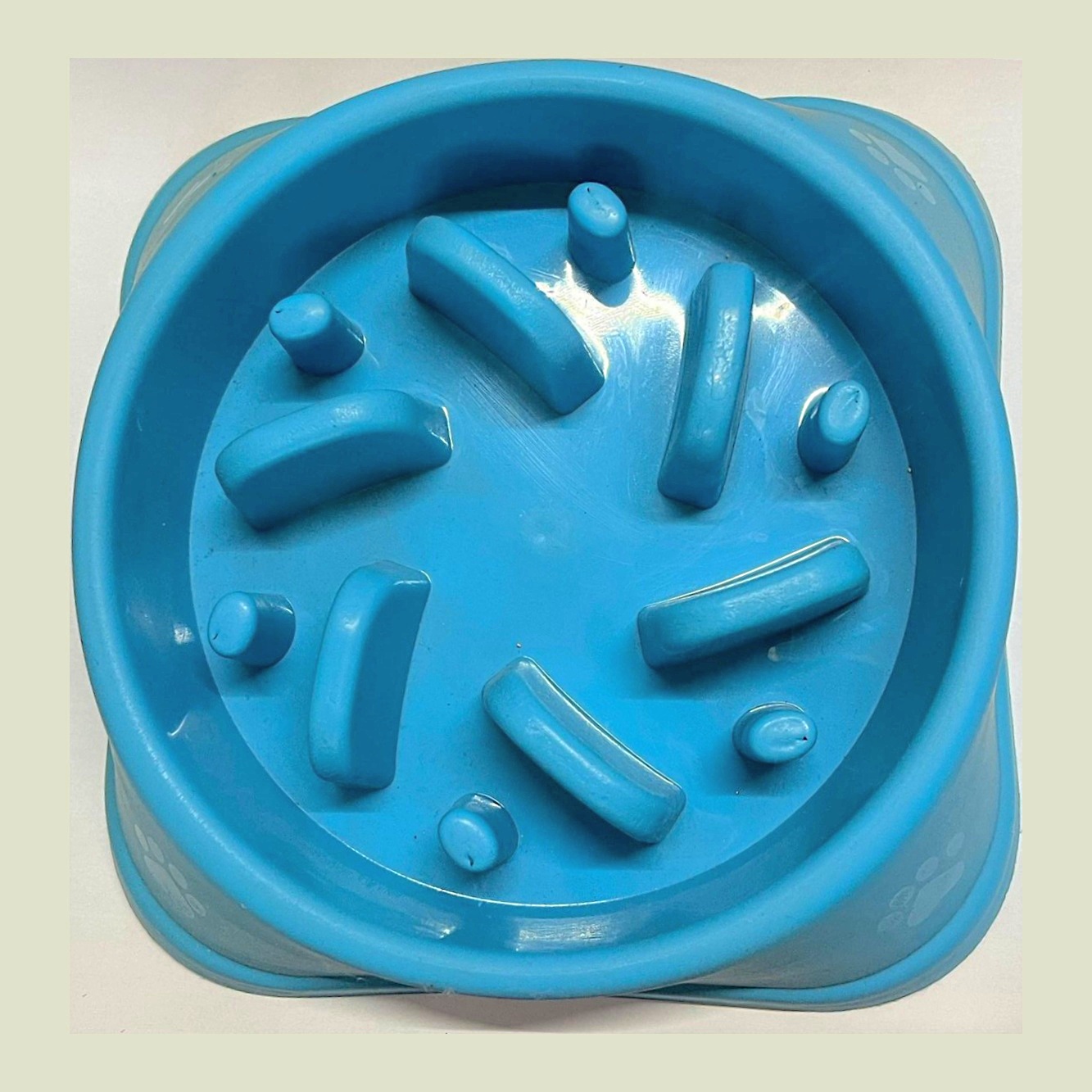
A shallow, easy-to-access feeder or suitable food toy can offer variety without taking over the room. Start with a small amount of the normal meal where your dog can reach it readily. Serve the rest normally if the activity is not a good fit. Your dog should not have to solve a difficult puzzle to get enough to eat.
Choose equipment for the dog's mouth, size, chewing style, and physical comfort. A dense maze is not automatically better than a simple bowl. Supervise, follow the manufacturer's instructions, inspect for damage, and wash and dry equipment after use. Stop if your dog bites the feeder, cannot reach the food comfortably, or tries to swallow parts. Ask your vet about suitable options for dental pain, swallowing difficulties, or medical restrictions.
Food budget: set aside activity food from the daily ration before you start. Count additional treats and edible chews too; small rewards still add up. For a prescription diet, allergy trial, weight-management plan, or other medical feeding instructions, use only approved food and check with the veterinary team before adding fillers. Do not introduce rich spreads just because a puzzle recipe suggests them.
The pictured bowl illustrates a feeder type, not a tested or recommended product.
Learn one tiny skill beside your chair
Try a hand target: hold an open hand close enough for an easy investigation. When your dog voluntarily touches it with their nose, mark the moment with a quiet “yes” and reward. Move the hand only slightly on later repetitions. Do not push it into their face or repeatedly ask after they turn away.
A minute or two is a reasonable starting experiment, not a prescribed daily quota. End earlier if attention fades. Other compact choices include responding to their name, voluntarily approaching a mat, or briefly looking at a grooming tool from a comfortable distance. Keep handling practice separate from an actual grooming job if your dog is worried; our home grooming and calm handling guide covers that wider routine.
For quiet downtime, use the gradual approach in teaching your dog to settle on a mat. Being motionless is not, by itself, proof of relaxation.
Play and chew without a pile of equipment
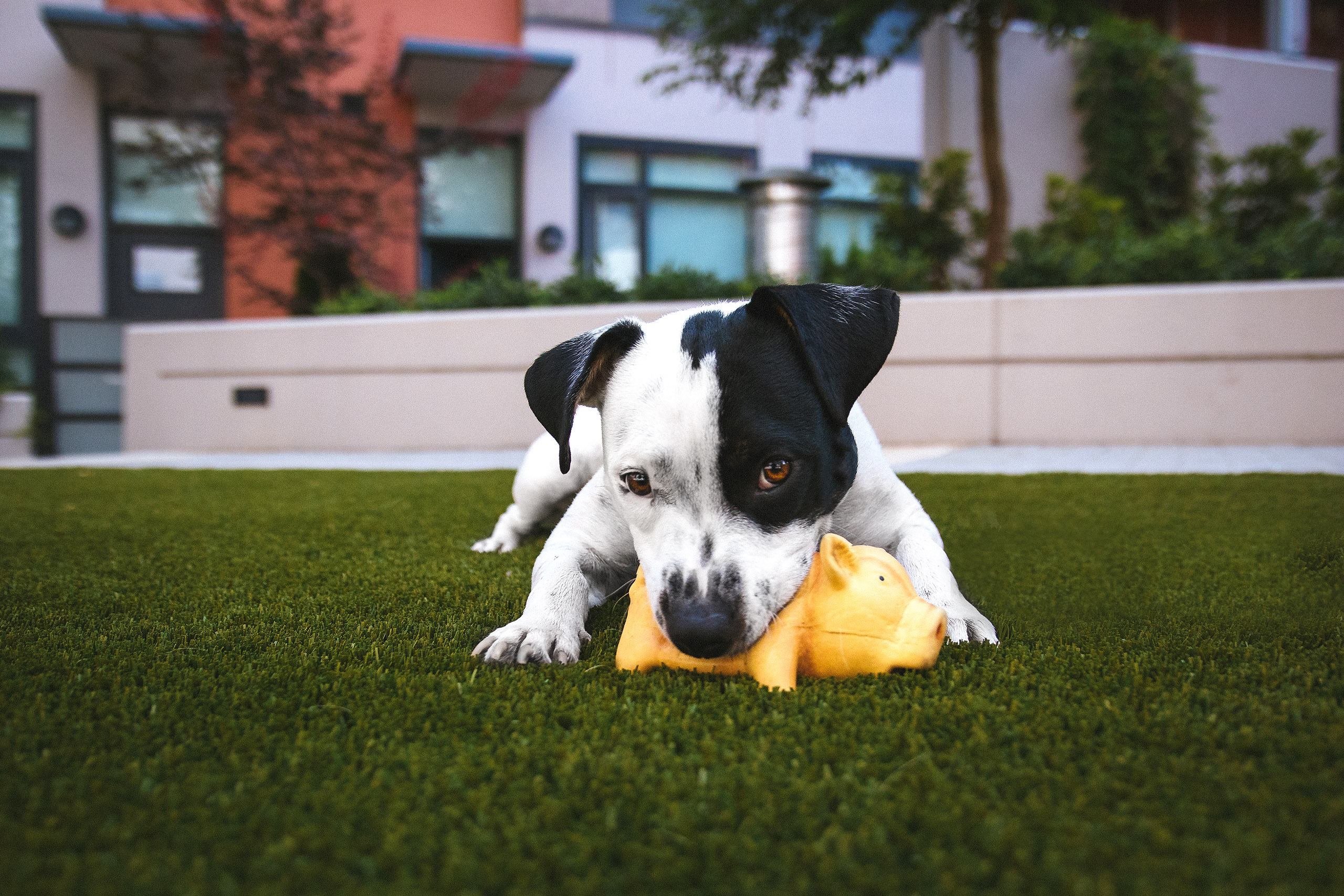
Illustrative outdoor photograph: choose toys for the individual dog, whether playing indoors or outside.
Keep a few appropriate favorites available and rotate one stored toy back into use every few days or weekly. Change the interaction before buying more: offer a choice of two toys, let your dog carry one, or hide a familiar toy in an easy spot. Rotation is an invitation, not a requirement to remove a treasured comfort object.
In a small room, avoid throwing toys toward furniture or turning a hallway into a slippery sprint track. If gentle tug suits your dog, keep their feet on the floor, avoid lifting or sharp neck movements, and take breaks. Stop if the game becomes uncomfortable or too intense.
For chewing, choose a dog-appropriate item for the dog's size, dental condition, and chewing strength. Avoid bones, antlers, and very hard objects that can damage teeth. No chew is risk-free: supervise, inspect it, and stop use when it breaks, develops sharp edges, or becomes small enough to swallow. Edible chews count toward food intake. Ask your veterinarian about suitable choices if your dog has dental or digestive problems.
Cardboard games are optional. Use only clean material without staples, tape, strings, or plastic, supervise continuously, and skip them for dogs that swallow packaging. A bare-floor food search offers less cleanup and fewer moving parts.
If your dog stiffens over an item, guards it, or growls, give them space rather than grabbing or punishing. Keep people and other animals away and seek qualified reward-based behavior help for a safe management plan.
Observe quietly, then leave room for rest

Some dogs enjoy watching quiet household activity from a comfortable bed. Others enjoy a view through a secure window. Offer a choice and an easy retreat; never encourage climbing onto unstable furniture or access to an open window or balcony.
A window is not enrichment if it repeatedly triggers barking, lunging, rigid staring, or an inability to disengage. Move the resting spot, reduce the view, and choose a quieter setting. Nor does a photograph of a resting dog establish how that dog feels: look at the whole situation and changes in your own dog's behavior.
Rest does not need to be earned by completing a puzzle. Leave comfortable, undisturbed sleeping space available and let a resting dog rest.
Adjust the game to the dog in front of you
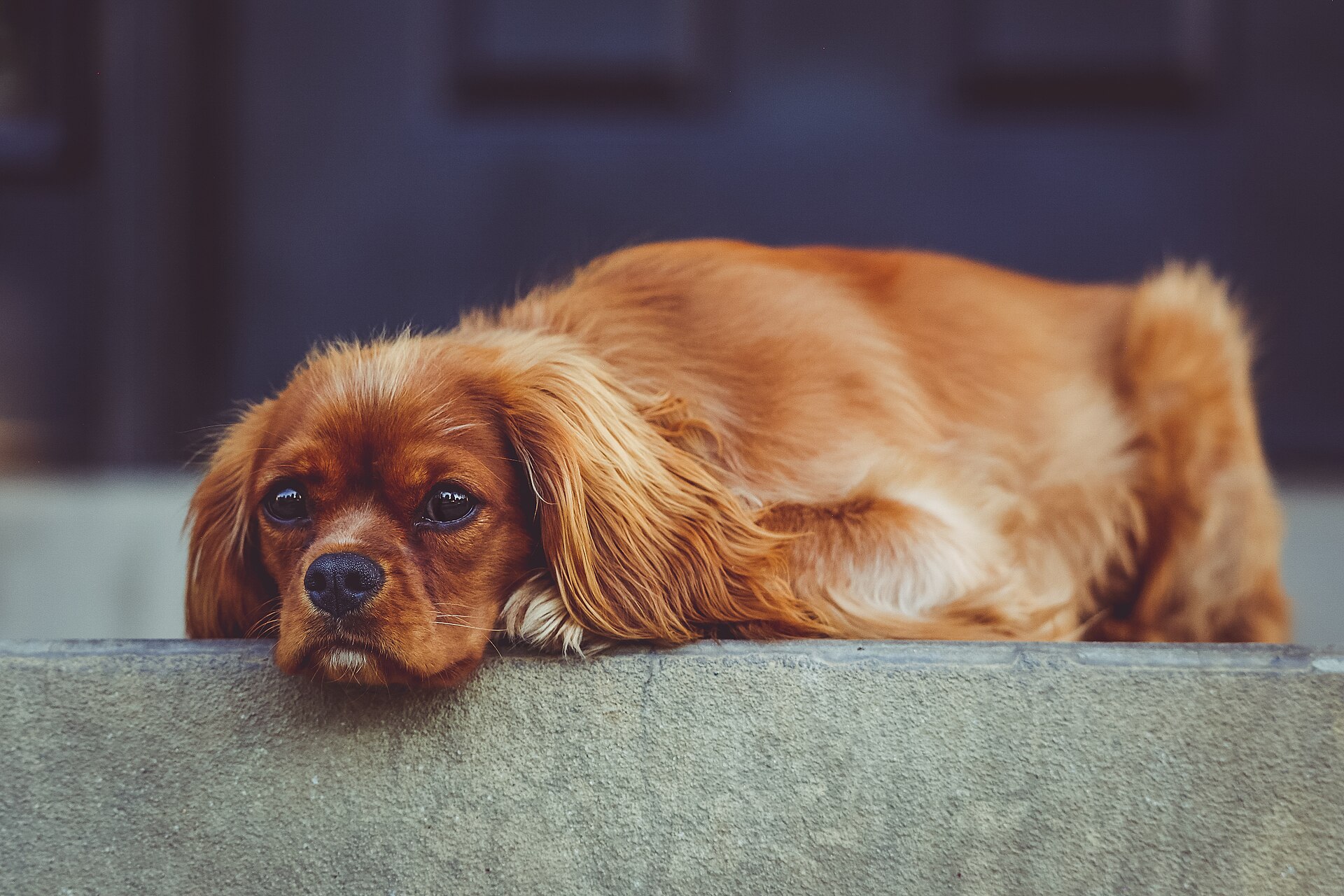
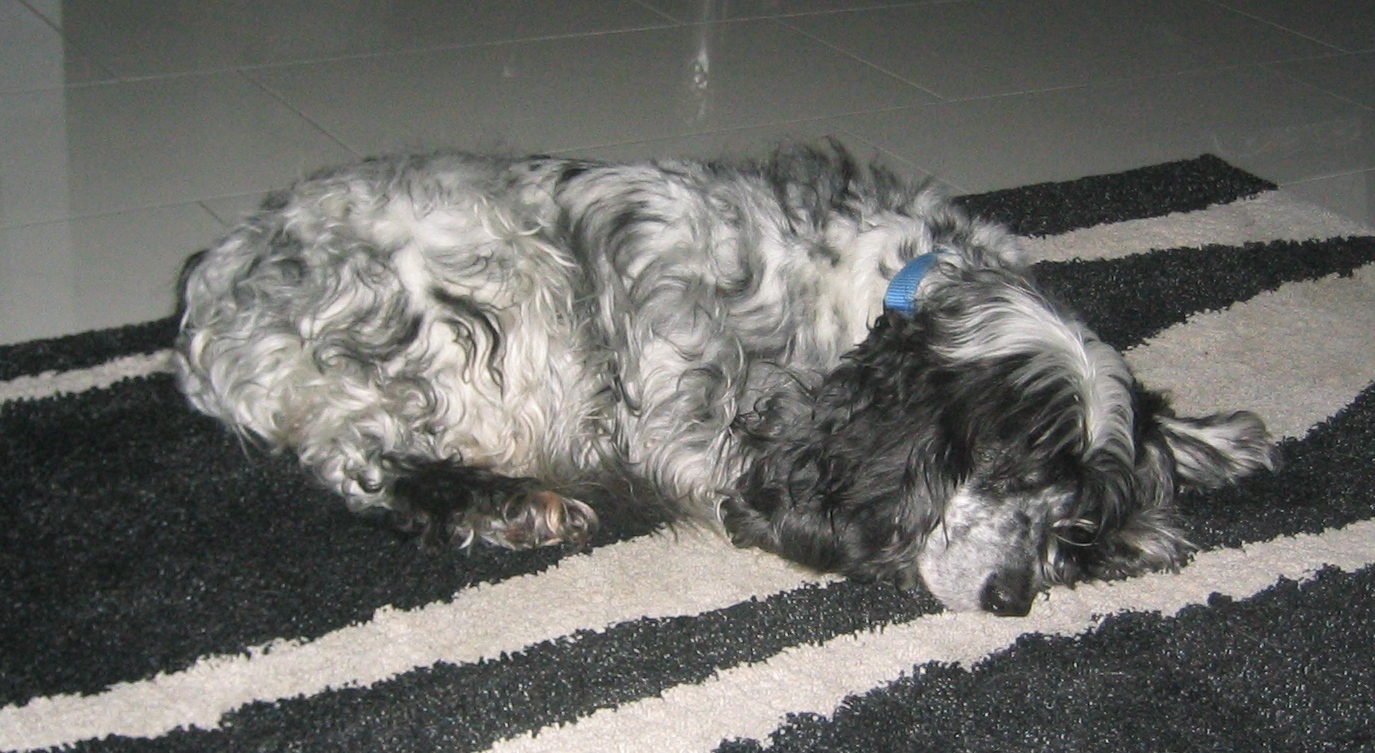
An illustrative resting dog; the photograph does not establish age, pain, or health status.
| Dog's needs | Start here | Avoid or change | | --- | --- | --- | | Puppy | A visible food find, brief play, then a rest opportunity | Long sessions, swallowable pieces, and keeping an overtired puppy busy | | Senior or reduced mobility | Nearby finds at a comfortable reachable height on a stable surface | Slippery floors, repeated bending if uncomfortable, jumping, or tight turns | | Restricted diet | Approved meal portions or a toy-based game | Unapproved treats, spreads, and edible chews | | Easily frustrated | One visible reward with immediate access | Tight folds, sealed containers, and withholding the whole meal | | Dog that swallows objects | Simple supervised searching without loose puzzle parts | Fabric, paper, cardboard, or destructible toys they may ingest | | Dog recovering from injury | Only activities cleared by the treating veterinarian | Assuming nose work or stationary play automatically fits activity restrictions |
If your older dog suddenly loses interest, struggles to reach food, or seems less comfortable, change the task and arrange veterinary advice. Our senior dog checkup guide explains useful changes to record.
A low-clutter rotation you can repeat
Use this as a menu, not a challenge to complete every day. Repeat a favorite, skip an unsuitable activity, and keep ordinary exercise, toileting, meals, and sleep in the routine.
| Day | One compact activity | Afterward | | --- | --- | --- | | Monday | Visible meal-piece search | Collect missed food | | Tuesday | Brief hand-target practice | Put rewards away | | Wednesday | Easy familiar-toy search | Return the toy to its usual place | | Thursday | Small meal portion in an easy feeder | Wash and dry the feeder | | Friday | Rotate one toy; offer gentle play | Inspect and store unused toys | | Saturday | Suitable supervised chewing | Check the item and put it away safely | | Sunday | Quiet companionship or repeat a favorite | Protect normal rest time |
For a broader mix that includes outdoor activities, see easy enrichment ideas for smart dogs. Here, the useful constraint is keeping each setup small enough to put away immediately.
Boredom, frustration, or distress?
An activity may fit when your dog approaches willingly, can succeed, pauses comfortably, and can leave. Repeated frantic pawing, hard biting at equipment, barking, avoidance, or guarding means stop and reassess. Reduce difficulty, change the activity, or offer a break; do not automatically add another challenge.
Destruction or restlessness alone cannot tell you whether a dog is bored. Pain, illness, fear, unmet toileting needs, and separation-related distress can also change behavior. Sudden or persistent changes—especially with appetite, mobility, drinking, or sleep changes—deserve veterinary advice.
If distress happens around departures or while alone, such as persistent howling, drooling, pacing, or escape attempts, contact your veterinarian and a qualified behavior professional. A food puzzle is not a treatment plan, and a dog accepting food does not rule out anxiety. Do not leave new DIY puzzles or destructible items as an experiment in keeping a distressed dog occupied. Seek urgent veterinary help for breathing difficulty, collapse, serious injury, or suspected ingestion of a dangerous object.
Frequently asked questions
What is the easiest indoor enrichment for a small apartment?
A supervised search for a few pieces of the dog's usual meal on clear, nonslip flooring needs little space or equipment. Keep the food visible at first, then slightly vary its location as your dog succeeds.
Can I enrich my dog's day without food?
Yes. Try an easy search for a favorite toy, a short game they enjoy, a choice of toys, or quiet companionship. The activity has to be rewarding to that dog; not every dog likes the same games.
How long should an indoor enrichment session last?
There is no universal target. Start with a brief easy session, even a minute or two, and adjust to comfort and interest. Finishing quickly is fine. Do not keep increasing difficulty just to occupy more time.
Does indoor enrichment replace a walk?
No. It can add interest on bad-weather days, but dogs still need appropriate movement, toileting opportunities, social contact, and rest. If health limits exercise, ask your veterinarian what activities fit the restrictions.
Why does my dog ignore a puzzle or get upset with it?
It may be too difficult, physically uncomfortable, unrewarding, or offered when the dog needs something else. Make access easier or stop. New loss of interest or persistent distress merits professional advice rather than a harder puzzle.
Sources and approach
This is an editorial guide, not a veterinary assessment, a trainer's case report, or a hands-on product test. The short session examples and rotation are flexible suggestions, not validated treatment schedules. Sources reviewed November 1, 2026:
- Dogs Trust: enrichment activities — individual fit, dietary needs, supervision, toy rotation, and rest.
- American Kennel Club: indoor scent games — introductory searching in small indoor spaces. This guide uses food and familiar toys, not essential-oil scent kits.
- ASPCA: separation anxiety — departure-related distress and the need to distinguish behavior problems from medical causes.
Photo credits
Photographs are illustrative, not records of testing or training outcomes. Files reused unchanged from the Dogthread library; library copies may be resized from their originals.
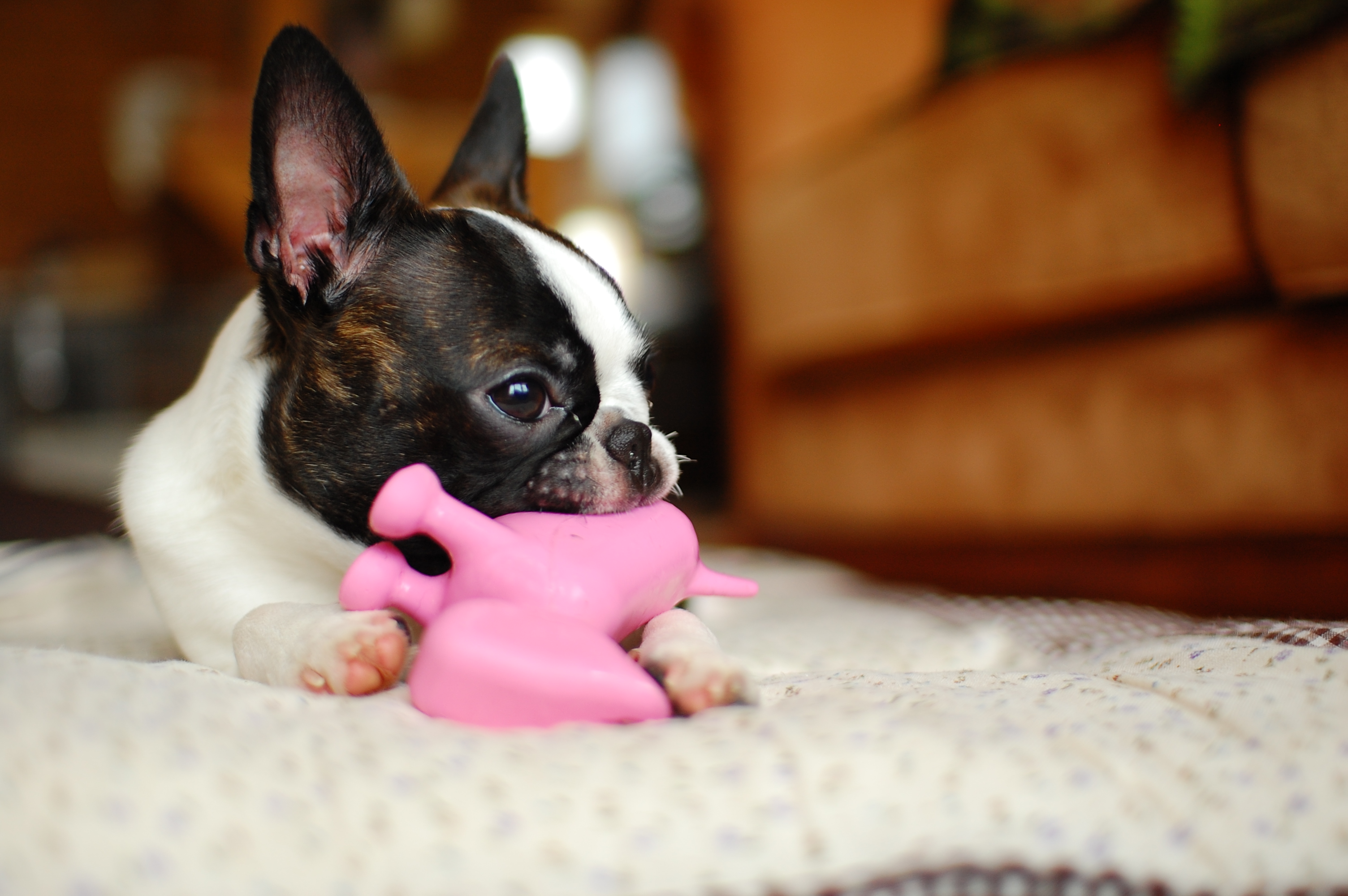
- A Boston Terrier lying indoors with a pink toy between its paws: Sendai Blog, CC BY 2.0.
- A blue slow-feeder bowl with raised ridges and studs: ELTORO.VET, CC0.
- A black-and-white puppy chewing a yellow toy on grass: Justin Veenema, CC0.
- A Beagle resting its head on a patterned blanket on a sofa: Slyronit, CC BY-SA 4.0.
- A ruby Cavalier King Charles Spaniel resting with its head down: Andrew Branch, CC0.
- A Cocker Spaniel asleep on a striped rug: Gürkan Sengün, CC BY-SA 3.0.